Why I Still Like the MidNite Classic 150 for Older Off-Grid Systems
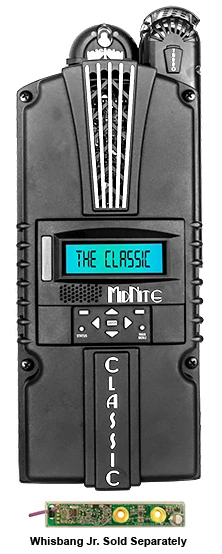
When I look at an older off-grid system, I’m not only asking how many watts the solar array has. I want to know whether the owner can understand what the system is doing when the batteries aren’t full or the generator has been running more than expected. That’s one reason I still like the MidNite Classic 150 MPPT Charge Controller.
The Classic 150 gives you useful information right at the controller. Its built-in MidNite Graphics Panel shows charging status, battery voltage, solar input, output current, and operating mode. That matters when you’re standing in front of an off-grid system and need to separate “the sun isn’t strong today” from “the controller is turned off” or “the battery settings don’t match the battery bank.”
A practical fit for many battery-bank sizes
The Classic 150 is designed for 12- to 72-volt battery systems. It has a 150-volt operating-voltage rating, and MidNite lists maximum output current by battery voltage: 96 amps at 12 volts, 94 amps at 24 volts, and 86 amps at 48 volts. The exact output still depends on battery voltage, available solar power, temperature, and configured limits.
Here’s the useful way to read that: the same controller can serve very different off-grid applications, but I still have to match its charging capability to your battery bank, array, wiring, and protection equipment. The 150 in the name refers to the controller’s input-voltage class. It does not mean the controller delivers 150 amps.
Why the display helps with troubleshooting
Older systems often accumulate changes over time: a different battery bank, a replacement inverter, more solar panels, or a new battery charger. The equipment may still operate, but the settings and expectations can drift apart. The Classic’s menus let you review the charging stage, voltage targets, input voltage, output current, and system messages without immediately reaching for a separate monitoring computer.
The controller also records operating history. MidNite says the Classic stores 380 days of daily data, along with short-term information captured every five minutes while it is charging. That gives us something better than a guess. If a customer says, “The batteries stopped getting full last week,” the history may help show whether solar production fell, the controller stopped charging, or the system simply spent more time under load.
If you want a quick visual tour, altE Store’s video comparing the MidNite Classic family is useful background. It explains the difference between the standard Classic, Classic SL, and Classic Lite, including the display, Ethernet monitoring, battery-voltage range, and data logging. It’s a general educational lesson, not a review of your exact system.
It can be monitored locally or remotely
The standard Classic 150, which is the model I’m discussing here, supports MidNite’s Local Application and MyMidNite monitoring options. That can make it easier to check system information without walking out to the power equipment every time.
Remote monitoring does not replace good system design or a properly configured battery. It simply gives you a better view of what is happening. That is especially valuable when a property is unattended for part of the week or when you’re helping someone troubleshoot from a distance.
The array still has to be sized correctly
The Classic 150 is flexible, but it is not a reason to ignore solar-panel voltage. MidNite’s current manual says the array’s initial open-circuit voltage should be about 33 percent higher than the highest battery voltage you plan to charge to. That gives the controller enough voltage to wake up and track properly.
That starting-voltage rule does not replace a cold-weather check. Solar-panel open-circuit voltage rises as the panels get colder, so I also check the array’s cold-weather voltage against the Classic 150’s operating limit and HyperVOC behavior.
I also keep the amp checks separate. The Classic’s output-current rating tells us how much charging current it can deliver to the battery. The array’s short-circuit current is a different number used when evaluating PV wiring, input protection, and equipment limits. If the system includes a separate inverter with a PV input, that inverter has its own operating-input current limit as well. I want to see the actual panel label, battery specifications, inverter model, and site conditions before choosing a string arrangement.
Where I think the Classic 150 makes the most sense
I especially like the Classic 150 as a replacement candidate for an older off-grid system that needs a capable controller without throwing away the rest of the system. It is not a blind drop-in replacement, so we still need to confirm the battery voltage, array voltage, protection, wiring, and communication needs. It can also fit a new off-grid design when those details fall within its range.
Its strongest advantage, in my view, is not one isolated number. It’s the combination of a broad battery-voltage range, a useful local display, stored operating history, remote-monitoring options, and support for different operating modes. When a system needs an answer instead of a guess, those details are worth something.
If you’re considering a Classic 150, send SolarMan the battery-bank voltage, panel information, inverter model, and a few pictures of the existing equipment. I can help you determine whether this controller is a sensible match or whether another approach would serve the system better.
Watch how it works
It explains the 150V/96A model class, 12- to 72-volt battery range, display, Ethernet monitoring, and data logging.
Comparing Midnite Solar Classic MPPT solar charge controllers — altE Store
Sources and product details
Manuals and product information behind the details above.
- MidNite Solar Classic 150 product page (manufacturer product page)
- MidNite Solar Classic Manual Rev V, Firmware 2193 (manufacturer technical manual)
- MidNite Solar Classic current-rating FAQ (manufacturer technical FAQ)
- MidNite Solar Classic product documents (manufacturer document index)
- Comparing Midnite Solar Classic MPPT solar charge controllers (altE Store educational YouTube video)
- English transcript for Comparing Midnite Solar Classic MPPT solar charge controllers (indexed video transcript and audio-language evidence)
- MidNite Solar Classic 150 MPPT Charge Controller (publisher product and video context)