Why I Like the Pytes V5 When a Battery Bank Needs Room to Grow
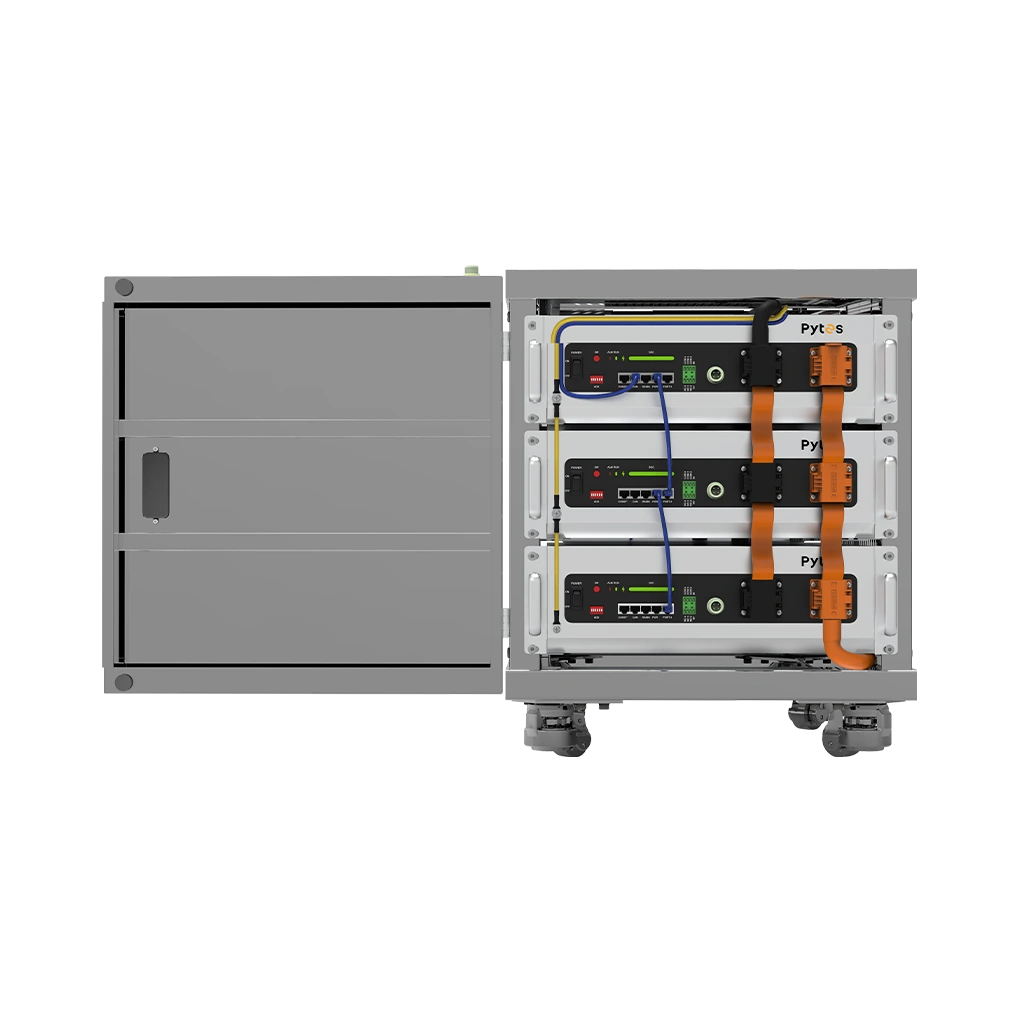
What I like about the Pytes V5 is that you don’t have to guess the final size of your battery bank on day one. One battery gives you a useful starting point, and compatible V5 units can be connected in parallel as your backup needs grow.
The V5 is a low-voltage lithium iron phosphate battery with a nominal voltage of 51.2 volts, a capacity of 100 amp-hours, and 5.12 kilowatt-hours of nameplate energy. That number comes from simple math: 51.2 volts × 100 amp-hours ÷ 1,000 = 5.12 kilowatt-hours.
What parallel expansion looks like
If you install two V5 batteries, the nominal bank becomes 10.24 kilowatt-hours. Three batteries provide 15.36 kilowatt-hours. The batteries remain a 51.2-volt bank; you are adding capacity and available battery current by placing matching units in parallel, not creating a higher-voltage battery system.
That distinction matters. The Pytes manual says V5 batteries are connected in parallel and must not be connected in series. A qualified installer also needs to use the correct busbar or combining method, matched power paths, protection, and an inverter that can accept the resulting battery current. Adding batteries does not automatically mean every inverter can deliver more power.
Here’s the way I usually explain it to a customer: one V5 may be a good fit for a smaller critical-load system. Two or more can make more sense when you want longer refrigerator, pump, communications, or evening-load coverage. The actual choice should come from your load list and backup goal, not from battery count alone.
The battery and inverter need to communicate
The V5 includes controller-area network, or CAN, and RS485 communication ports. In plain language, that gives the battery management system a way to share information such as state of charge, charging limits, and protection status with a compatible inverter.
I consider that communication an important part of the system, not an optional extra. A battery may have the right voltage and energy rating but still be a poor match if the inverter does not support the battery’s communication protocol, cable arrangement, firmware requirements, or approved settings.
For example, Sol-Ark’s current battery integration guide identifies the Pytes V5 and describes the CAN connection, master-battery address setting, and lithium battery setup. That is a useful example of what compatibility really means: the battery and inverter are designed to exchange operating information rather than simply being connected by positive and negative cables.
I’ll confirm the exact inverter model and the exact V5 revision before recommending a system. Pytes has used different V5 versions with different power-terminal arrangements, so the label and current manual matter. I don’t want a customer ordering a cable or enclosure based on a nearby model that only looks similar online.
Rack mounting is useful, but location still matters
The V5’s rack-battery format can make a clean battery room or equipment area easier to organize. Pytes also lists cabinet and mounting options, which can help when the available space is limited or when you want the batteries grouped neatly beside the inverter.
For Hawaii installations, I pay close attention to whether we are discussing a bare battery module or a suitable cabinet. The current V5 manual identifies the battery module as an indoor product, while a properly rated cabinet can provide the environmental protection needed for an outdoor location. A covered lanai, garage, utility room, and outdoor cabinet are not interchangeable installation conditions.
Where the Pytes V5 fits best
I like the V5 for customers who want a modular 48-volt-class battery system for solar self-consumption, outage backup, or an off-grid application and who may expand later. It is especially worth considering when the inverter has an established Pytes integration and the system can be laid out with proper battery protection, communication, ventilation, and access.
A battery bank is not sized by kilowatt-hours alone. We also need to look at the loads you want to run, how long you want them supported, the inverter’s continuous and surge demands, solar charging, generator plans, and the place where the batteries will live.
If you’re considering a Pytes V5 system, send me your inverter model, the loads you want backed up, and whether the batteries will be indoors or in a cabinet. I can help you compare one battery against a larger parallel bank and decide whether the V5 is a sensible match for your SolarMan system.
Watch how it works
It is not presented as a review of a SolarMan installation.
Affordable Whole Home Backup -Pytes V5 LFP Battery Systems — Charge Solar
Sources and product details
Manuals and product information behind the details above.
- Pytes V5 official product page (manufacturer product page)
- Pytes V Series V5 user manual, version 1.8 (manufacturer technical manual)
- Sol-Ark Battery Integration Guide — Pytes V5 section (inverter manufacturer integration guide)
- Pytes and Victron battery compatibility information (inverter manufacturer compatibility documentation)
- Charge Solar — Affordable Whole Home Backup: Pytes V5 LFP Battery Systems (educational video)