Why I Like the Pytes V16 When Outdoor Storage Needs Real Load Planning
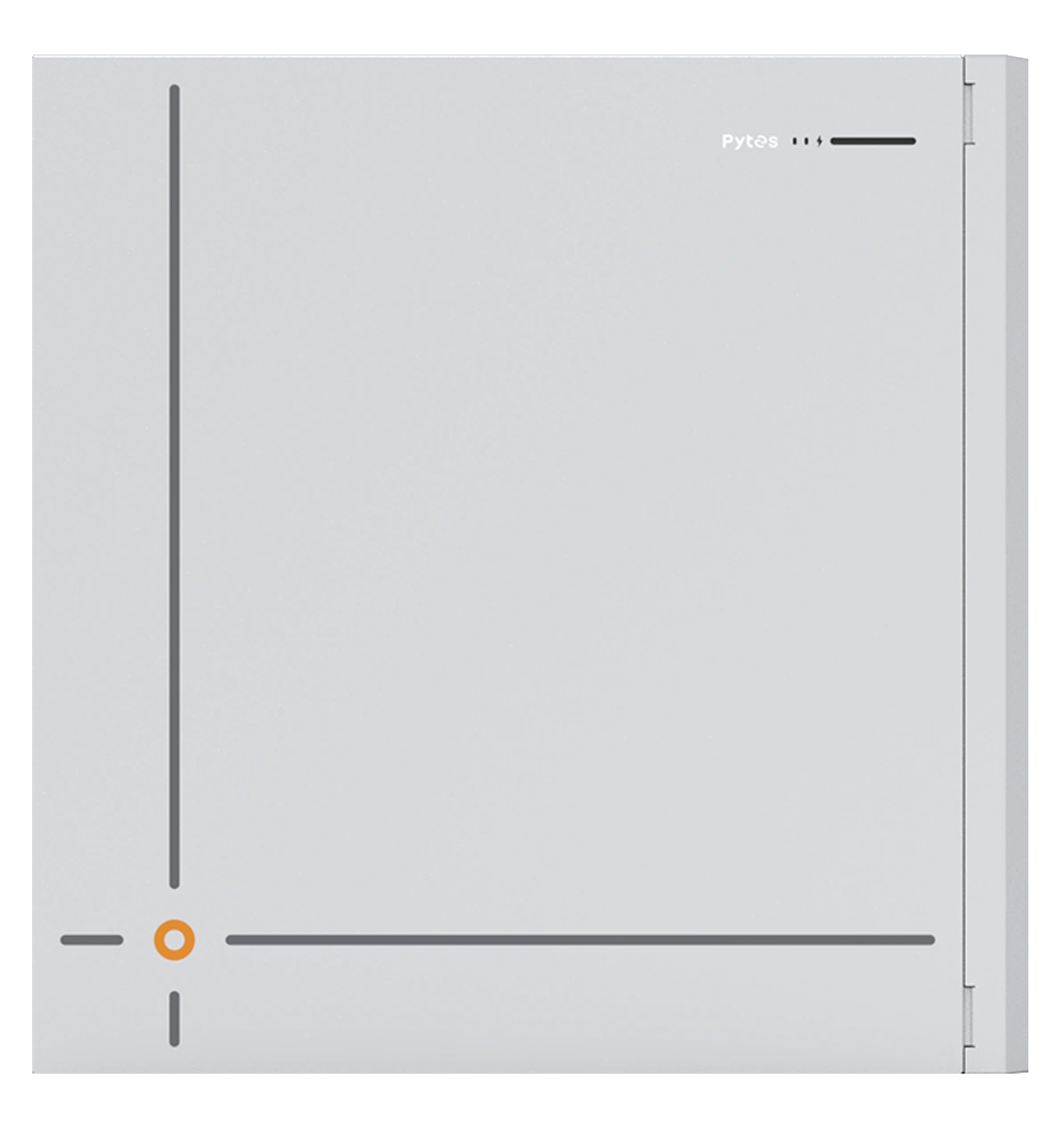
What I like about the Pytes V16 is that it gives you a serious amount of battery in one outdoor-ready package. The nameplate energy is about 16 kilowatt-hours (kWh), and the battery is built around a 51.2-volt lithium iron phosphate, or LFP, platform. That makes it worth considering when a Hawaii home needs more than a small refrigerator-and-lights backup system.
There’s one distinction I always make before matching a battery to an inverter: energy and power are different numbers. Energy is how much the battery can store. Power is how much load it can support at a given moment.
16 kWh does not mean 16 kW of household load
The V16’s rated energy is 16.07 kWh, commonly presented as 16 kWh. That gives you a useful starting point for estimating how long the battery may support your loads. For example, a 1 kW combined load would use roughly 1 kWh per hour before system losses and operating limits are considered.
But the battery’s output rating is a separate question. Pytes lists a recommended continuous discharge current of 150 amps, equal to about 7.68 kW at the nominal 51.2-volt battery voltage. The maximum continuous discharge rating is 200 amps, or about 10.24 kW. Pytes also lists a 300-amp peak discharge level, equal to about 15.36 kW for 15 seconds.
I would not use that short peak number as a promise that the battery will run a heavy load indefinitely. I use it to understand the battery’s ability to handle a brief surge, such as a motor starting. The inverter, wiring, protection equipment, battery state of charge, and the actual appliance still have to be matched correctly.
Where that helps in a Hawaii home
A V16 can make sense when your backup plan includes more than essential lighting and a modem. You might be trying to support a refrigerator, freezer, water pump, selected kitchen circuits, air-conditioning equipment, or other loads that create a larger combined demand.
That does not mean every appliance should run at once during an outage. I still want to see the actual load profile and decide which circuits matter most. A battery with 16 kWh of stored energy can provide useful evening coverage, but a high-power air conditioner or electric cooking load can use that energy much faster than a small essential-load panel.
For off-grid work, the same lesson becomes even more important. The V16 can store solar energy for nighttime use, but the solar array, inverter, generator, and battery must be planned as one system. I want to know both how much energy you use in a day and which loads create the highest simultaneous power demand.
Outdoor installation is a real advantage
The V16 is designed for wall-mounted or ground-mounted installation and carries an IP66 enclosure rating. In plain language, that gives the enclosure strong protection against dust and water exposure. It also has a C4-M corrosion-resistance rating, which is relevant when equipment may see humid or coastal conditions.
That does not mean I would mount it carelessly in the sun or ignore the installation manual. Location, clearances, structure, service access, and local electrical requirements still matter. The benefit is that you have more placement flexibility when an indoor battery room is cramped or unavailable.
The built-in heating film is another thoughtful feature, although it is more useful in cold conditions than in a typical Hawaii installation. Pytes specifies that the heating function needs an external energy source, such as solar, grid, or a generator, to operate. That is a good example of why a feature should be understood in the context of the whole system rather than treated as a magic button.
Communication is part of the battery match
The V16 supports CAN, RS485, Wi-Fi, and dry-contact communication. With a compatible inverter, closed-loop communication allows the battery and inverter to exchange information such as state of charge and protection limits.
I pay close attention to that part of the design. “Works with 48-volt equipment” is not enough by itself. The exact inverter model, communication method, cable, protocol, and configuration need to agree. Pytes publishes communication settings for specific inverter families, but the current model documentation should be checked before equipment is ordered.
Pytes also describes expansion up to 16 V16 units in parallel without a Pytes hub. That is useful when a project may grow from a substantial residential battery into a much larger whole-home, off-grid, or light-commercial system. Expansion still requires proper current sharing, protection, physical layout, communications, and inverter capacity planning.
If you want to see how the pieces fit together, Pytes’ V16 Installation Guide walks through unboxing, mounting, the conduit box, inverter setup, battery communications, wiring, and startup. I see it as a useful visual companion when you’re beginning to plan a project, while the exact manuals and site requirements still determine the final installation.
How I decide whether the V16 fits
I like the Pytes V16 when you want outdoor installation flexibility, a large single-battery energy block, strong continuous output, and a path to future expansion. I would start by listing your important loads, measuring or estimating their daily energy use, and identifying the largest loads that may run together.
Then I would match the V16 to the inverter and the solar array, not select the battery in isolation. If you’re considering the V16 for a Hawaii home, backup system, or off-grid project, contact SolarMan and I’ll help you compare the battery’s energy and power numbers with the loads you actually need to run.
Watch how it works
Official Pytes V16 installation lesson covering unboxing, mounting, conduit-box and inverter setup, power and communication connections, and startup.
PYTES V16 Installation Guide | Complete Step-by-Step Tutorial — Pytes Energy
Sources and product details
Manuals and product information behind the details above.
- Pytes V16 Current Product Page (Official manufacturer product page)
- Pytes V16 Datasheet EN V20260330 (Official manufacturer datasheet)
- Pytes V16 Current Documentation Listing (Official manufacturer documentation index)
- Pytes V16 Installation Guide Video Listing (Official manufacturer video page)
- Pytes V16 Installation Guide English Transcript Evidence (Official Pytes US & Canada publisher post)