Why I Like the MidNite MNSPD’s Visible Surge Protection Check
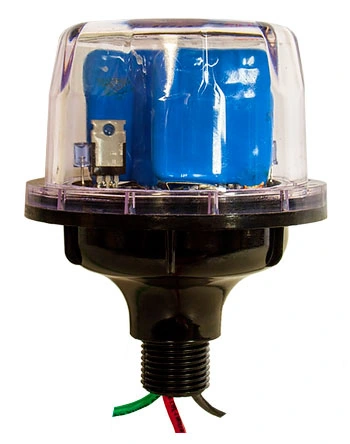
One reason I like the MidNite MNSPD is that it gives you something useful after installation: a visible way to check the protected circuit. The blue status lights don’t tell you how much solar you’re making or how full your battery is. They show that voltage is present, which makes an otherwise invisible protection device easier to include in normal system maintenance.
That matters in Hawaii because a solar system has several valuable electrical paths: the photovoltaic array, charge controller, inverter, battery equipment, monitoring devices, and the home’s AC wiring. A nearby lightning strike or another electrical event on a connected circuit can put stress on sensitive electronics. Surge protection is not a magic shield for the whole property, but it can be an important part of protecting the right paths.
Start with the circuit, not the product number
I don’t choose an MNSPD just because it has a large voltage number on the label. First, I want to know whether we’re protecting alternating current (AC) or direct current (DC). Then I check the actual maximum continuous voltage that circuit can present.
MidNite lists the MNSPD-115 for circuits up to 90 volts AC and for 12-, 24-, and 48-volt DC battery circuits. The MNSPD-300-AC is intended for 120/240-volt AC circuits. The MNSPD-300-DC is intended for off-grid photovoltaic combiners and charge-controller inputs up to 300 volts DC. The MNSPD-600 is aimed at higher-voltage applications such as 316/480-volt AC circuits, grid-tie photovoltaic combiners, and grid-tie inverter inputs.
Those are useful starting points, not permission to substitute one model for another. The protector’s maximum operating voltage needs to be higher than the circuit voltage. With photovoltaic arrays, the worst-case array voltage matters, not just the number printed in the system name. I want to see the actual inverter, charge-controller, array, and battery information before recommending the exact device.
Why the connection path should be short
A surge protective device works by limiting transient voltage and directing surge energy through the protection and grounding path. That path should be short and properly bonded. Extra wire length and unnecessary bends add impedance, which can reduce how effectively the device limits voltage at the equipment being protected.
In practical terms, I want the MNSPD located close to the panel, combiner, inverter, or other equipment whose circuit we’re protecting. The grounding and bonding arrangement also has to be correct. The installation manual shows the device connected with its circuit conductors and green grounding conductor, but the final installation belongs with a qualified installer who can follow the applicable electrical requirements.
The blue lights help with maintenance
MidNite’s specification sheet describes a blue status LED for each protected leg. On the MNSPD-300-AC, the LEDs indicate voltage between each line and ground. On the MNSPD-115, MNSPD-300-DC, and MNSPD-600, the indication is based on voltage between the two protected circuit conductors.
That distinction is useful because the lights are a status check, not a complete diagnostic. On a photovoltaic circuit, the lights may go out at night because the array is not producing voltage. If the circuit should be energized and the expected lights are off, a qualified person should investigate. MidNite’s manual states that the MNSPD contains no serviceable parts, so I would not treat it as an enclosure to open in the field. After a serious nearby lightning event, have the protector and connected equipment inspected and follow the appropriate manufacturer service or replacement path.
One system can need more than one MNSPD
Suppose you have a 48-volt battery bank, a charge controller receiving a higher-voltage solar array, and a 120/240-volt inverter output. That is not one surge-protection decision. It may involve an MNSPD-115 for the battery circuit, an MNSPD-300-DC for an appropriate off-grid photovoltaic input, and an MNSPD-300-AC for the inverter’s AC circuit—if those models match the actual maximum voltages and equipment requirements.
The point is not to install three devices automatically. The point is to look at each electrical path separately instead of assuming one protector covers everything.
MidNite’s SPD Install - Hawaii video is a useful visual introduction to how an MNSPD fits into a solar protection layout. It shows the product as part of a complete protection path rather than as an isolated accessory. It’s a general installation lesson, not a review of a particular SolarMan system.
If you’re building or upgrading a Hawaii solar system, send me the inverter and charge-controller models, the array voltage, and the battery voltage. I can help you sort out which MNSPD circuit options actually fit, where they belong, and how to make the status check part of your normal system maintenance.
Watch how it works
A manufacturer-published educational installation overview showing how an MNSPD fits into a Hawaii solar protection layout. MidNite Solar Inc.
MidNite Solar SPD Install - Hawaii — MidNite Solar Inc.
Sources and product details
Manuals and product information behind the details above.
- MidNite Solar MNSPD specification sheet (Official manufacturer technical specification)
- MidNite Solar Surge Protective Device Installation Manual (Official manufacturer installation manual)
- MidNite Solar Surge Protection Devices product page (Official manufacturer product page)
- MidNite Solar SPD Install - Hawaii (Manufacturer educational video)
- MidNite Solar SPD video library (Official manufacturer video library)