A generator can be running while your batteries barely move. With the Fortress Power ENVY DUO 21, that may mean the inverter is not accepting the generator's voltage or frequency, the available AC power is being used elsewhere, a setting is limiting charge, or the battery controls are holding it back.
I like the ENVY DUO 21 for this kind of system because generator operation is built into the inverter instead of requiring a separate charger to manage the recovery. The inverter can supply the backed-up loads and charge the batteries at the same time. The important phrase is at the same time—not that every watt from the generator goes straight into the battery.
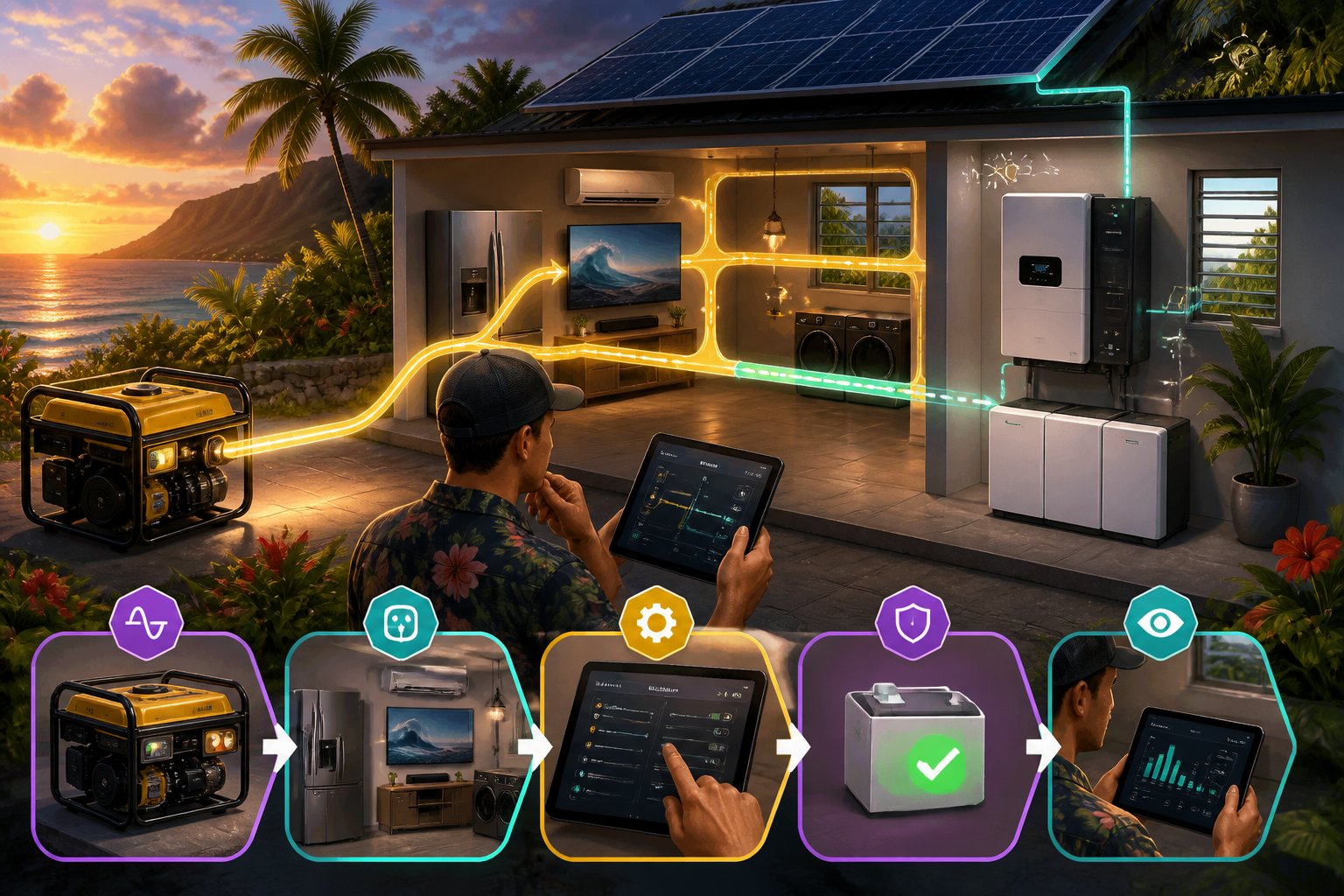
Start with where the generator power is going
Imagine a 10-kilowatt generator running while the house is using 7 kilowatts. That leaves roughly 3 kilowatts of headroom before the inverter's charge settings and generator-port limits are considered. If the loads rise nearly to the generator's available output, the batteries may receive very little charge even though the generator sounds perfectly normal.
That's why I first look at the ENVY DUO 21 display or monitoring data for generator voltage and frequency, load power, battery charge power, and battery current. The manual identifies separate readings for generator input, load power, rectifying power, battery charging power, and battery current. Those readings tell us whether the problem is missing or unacceptable AC input, heavy household demand, or a charging limit.
The charge settings decide whether recovery begins
In the Generator settings, the ENVY DUO 21 has a battery charge-current limit, generator-rated-power setting, and charge-start and charge-end values. Depending on the battery operating mode, the inverter uses state of charge (SOC) or battery voltage to decide when to start and stop generator charging.
A low charge-current setting can make a healthy generator appear ineffective. The opposite mistake is just as serious: setting the inverter higher than the battery manufacturer or battery-management system allows. The ENVY DUO 21 has a listed maximum battery charge current of 250 amps, but that's an inverter capability—not permission to charge every battery bank at 250 amps. I match the setting to the installed battery bank, approved communication profile, and battery documentation.
The web-based Gen Boost feature adds another piece to the picture. Fortress says it prioritizes the loads and sends surplus generator capacity toward the batteries. If photovoltaic power is present, the generator can share charging with the solar input. That means the displayed battery-charge power can change as household loads and solar production change.
Also check the charge-start threshold. If the battery SOC or voltage is above the generator-start setting, the inverter may not request charging. If the generator was started manually for an exercise run, that doesn't automatically mean the battery will accept a full charge. The inverter still follows its charge logic.
Solar can change the picture
Photovoltaic power may already be carrying the loads or charging the batteries. That can make generator charging look inconsistent from one hour to the next. A sunny array may supply much of the household demand, while the generator contributes only the amount allowed by the operating mode and charge settings.
For an off-grid system, I want to know whether the ENVY DUO 21 is operating in the intended off-grid mode and whether the generator is connected to the correct generator input. The manual also describes a micro-grid option for a generator connected to the inverter's grid port. That's a different arrangement, so the setting must match the actual connection. Don't change that option casually just because the generator is running.
Respect the generator-port and battery limits
The ENVY DUO 21 generator pass-through relay is rated at 90 amps, and Fortress Power recommends limiting continuous current to 80 amps. The combined load and charging demand must stay within the applicable limit. A large generator doesn't remove that inverter-side limit.
On the battery side, the battery-management system may reduce or stop charging because of high state of charge, temperature, cell voltage, a communication issue, or another protection event. Closed-loop communication is valuable here because the battery can tell the inverter what current it can accept. If the battery isn't communicating, the inverter may be using open-loop settings or refusing the requested charge.
My troubleshooting order
- Confirm the source: Check generator voltage and frequency at the inverter's monitoring screen and confirm that the generator breaker and input arrangement match the approved design.
- Check the load: Temporarily reduce large loads such as pumps, water heaters, compressors, or cooking equipment. If charging improves, the generator was supplying the loads first.
- Review generator settings: Check charge-current limit, generator-rated power, charge-start SOC or voltage, and charge-end SOC or voltage.
- Review the battery: Confirm battery communication, battery state, temperature, alarms, and the battery's permitted charge current.
- Watch the numbers: Compare generator input, load power, rectifying power, battery charge power, and battery current while the system is operating.
Fortress Power's general Envy commissioning lesson is useful because it shows where battery-charge settings and inverter programming live. For the ENVY DUO 21, I would still use the current Duo 21 manual and the exact battery documentation as the authority for the installed revision.
A generator that runs without charging is usually giving us information, not a mystery. Once we separate accepted generator input, household load, solar contribution, inverter settings, and battery permission, the next step becomes much clearer. If you're planning an ENVY DUO 21 system in Hawaii or trying to improve an existing generator-recovery plan, contact SolarMan and I'll help match the inverter, battery bank, generator, and operating priorities before the next long cloudy stretch.