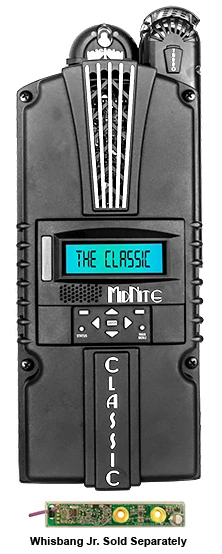
One Classic 150 can be a strong charge controller. The more interesting question is what happens when your solar system grows beyond one controller.
Maybe one roof section faces east and another faces west. Maybe you’re adding a second array later. Maybe the battery bank has grown and one controller no longer represents the whole charging plan. In those cases, I like the Classic 150 because MidNite gives you a way to use multiple controllers as a coordinated group instead of leaving each one to make its own decisions.
Each Classic gets its own solar job
The first idea is simple: each Classic needs to be matched to its own photovoltaic, or PV, input. The controllers are not meant to share one PV array. Instead, one Classic might track an east-facing array while another tracks a west-facing array, with both controllers charging the same battery bank through properly sized system connections.
That arrangement can be useful in Hawaii because roof areas are not always identical. An east roof may begin producing earlier, while a west roof may carry more afternoon production. Separate controllers let each array operate at its own maximum power point rather than forcing different roof conditions through one shared PV input.
The battery side is a different matter. Both controllers need to be planned around the same battery voltage, the battery manufacturer’s charging settings, over-current protection, conductor layout, and the battery bank’s allowed charging power. Two controllers do not automatically mean the battery can accept unlimited charging current.
Follow-Me keeps the charging stages together
This is where the Classic 150’s Follow-Me function earns its place. MidNite documents Follow-Me as a coordination system for multiple Classics. It shares charge-stage information, battery-temperature information, and selected ground-fault behavior across the network.
In plain language, the controllers keep asking one another, “What charging stage are you in?” If one controller reaches Float first, the others can be told to move to Float as well. Follow-Me can also coordinate Equalize commands, although the Equalize settings still need to be entered in each Classic.
Absorb is the important exception. Each Classic must independently reach its own Absorb voltage setting. Follow-Me coordinates the broader charging behavior, but it does not make every controller produce the same number of amps. One array may be shaded, smaller, or pointed in another direction, so each Classic still processes the power available from its own PV input.
A useful example for a growing system
Imagine a 48-volt battery system with one solar array on the east side of the property and a second array added later on a west-facing carport. I would rather give each array its own properly matched Classic 150 than combine unlike roof sections carelessly.
The first Classic may begin charging in the morning. The second may contribute more strongly later in the day. With Follow-Me enabled, both controllers can share the battery-temperature information from one properly located battery-temperature sensor and coordinate the major charging stages.
That can make the system easier to understand during normal operation. If the display shows one controller in a different stage, I don’t immediately assume something is broken. I first remember that each Classic can still process a different amount of power, and that Absorb must be reached independently even though Follow-Me coordinates other parts of the charging process.
What I want checked before adding the second controller
I want the exact Classic model and firmware identified first. MidNite says the firmware should match across the Classics used with Follow-Me. I also want the battery manufacturer’s charging limits, the battery bus layout, the PV string design, and the controller input and output protection reviewed together.
The network itself matters too. MidNite’s manual shows the Follow-Me connection as a loop, and the company warns that reversed cables can damage a Classic if they remain connected. After setup, the blue internal indicator and shared battery-temperature readings give the installer useful ways to confirm that the network is actually communicating.
For a system with multiple Classics, I also like giving each unit a clear name or address so the local display and monitoring software don’t leave you guessing which roof section you’re looking at. That small organizational step can save time when you’re troubleshooting production later.
The Classic 150 is not the only way to build a larger solar-storage system, but it gives me a practical path when the array is naturally divided into separate sections. You get independent PV tracking, a local display, monitoring, and a documented coordination method for multiple controllers.
If you’re considering a second solar array or trying to make an older battery system easier to expand, contact SolarMan. I can help compare the PV sections, battery limits, controller count, and Follow-Me requirements before you commit to equipment.