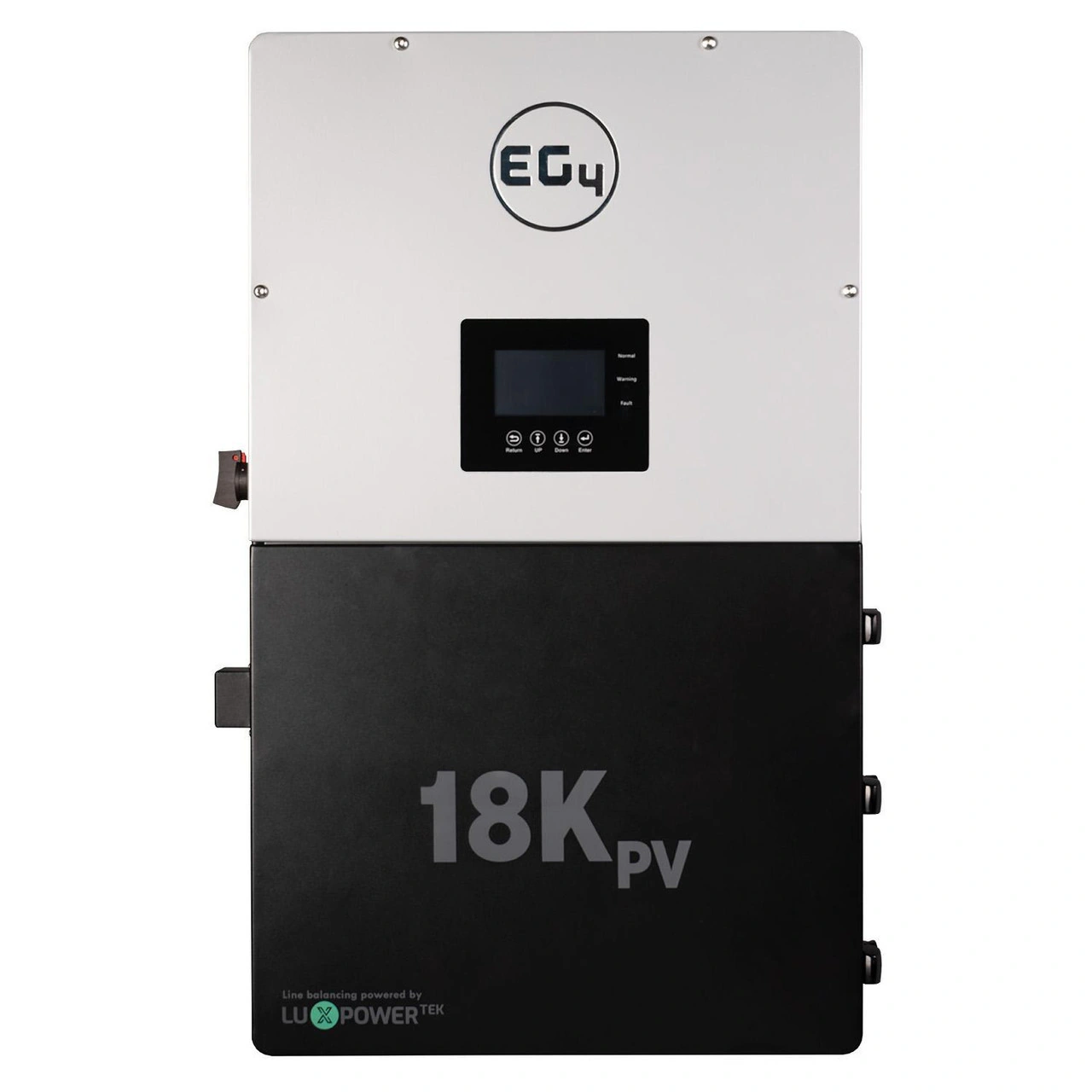
One reason I like the EG4 18kPV is that it gives us three independent maximum power point tracking, or MPPT, trackers to work with. It also gives us two PV input positions on MPPT 1 and one each on MPPT 2 and MPPT 3. That matters when a Hawaii roof is not one simple rectangle facing one direction.
You may have one roof section facing southeast, another facing southwest, and a third area affected by a chimney, palm tree, or afternoon shade. With three MPPT trackers, I can evaluate those areas separately instead of asking one tracker to make every section work together. That does not mean every roof section automatically gets its own tracker; the voltage, current, string length, and array layout still decide what fits.
Think of each MPPT as its own solar lane
EG4 rates the maximum usable operating-input current at 25 amps for MPPT 1 and 15 amps for each of the other two. The separate maximum short-circuit input-current limits are higher: 31 amps for MPPT 1 and 19 amps for MPPT 2 and MPPT 3.
Those are not interchangeable numbers. The 25-amp and 15-amp figures are the operating-input limits the inverter gives those MPPTs while the array is producing power. Short-circuit current is a separate permitted-array check. I want both numbers from the panel datasheet before I approve a string arrangement.
A practical roof example
Suppose we are looking at a 15-panel, 640-watt array. The arithmetic is simple: 15 × 640 watts gives us 9,600 watts of rated panel power. That is a useful starting point, not a promise that the roof will produce 9,600 watts all day.
The next question is how those panels are divided. If ten panels receive similar sunlight and five panels sit on another roof face, I would rather evaluate those sections independently than force them into one MPPT group. The final string count still depends on the panel's voltage, current, temperature coefficients, roof layout, rapid-shutdown equipment, and the inverter's current limits.
The EG4 specification sheet lists a 100–600-volt DC input range, a 140–500-volt MPPT operating range, and a nominal MPPT voltage of 360 volts. Cold weather raises a panel's open-circuit voltage, so the design has to stay below the inverter's voltage limits at the coldest expected condition. In Hawaii, that cold correction may be less dramatic than on the mainland, but it still belongs in the calculation.
Why panel current deserves attention
Modern high-wattage panels can produce more current than older modules. If two strings share MPPT 1, their operating currents add together. For example, two strings that each operate around 12 amps would total about 24 amps, which is near that MPPT's 25-amp usable-current limit. That same example would need a separate short-circuit-current check; 24 amps of operating current is not automatically the short-circuit value.
This is also where bifacial panels deserve care. Extra rear-side light can increase array current beyond the front-side nameplate condition. I do not treat a bifacial array as though the back of the panel contributes nothing. The actual panel specifications, mounting environment, and applicable design rules have to be included.
Where the 18kPV fits well
The 18kPV can use up to 18 kilowatts of solar power and lists 21 kilowatts as its recommended maximum solar input. That gives us useful design flexibility, especially when the array needs to serve daytime loads, charge a 48-volt battery bank, and continue producing during less-than-perfect sun.
It does not mean the inverter can deliver 18 kilowatts of AC power to the house. Its continuous AC output is 12 kilowatts at 240 volts. I keep those numbers separate because solar input, battery power, and household output are three different parts of the system.
For a visual refresher on how MPPT equipment uses voltage and current, altE Store's lesson “Solar Charge Controller: Off Grid Solar Power System Design - Step 4” walks through open-circuit voltage, short-circuit current, MPPT operation, and charge-controller sizing. It is a general lesson, but it makes the inverter conversation easier to follow.
If you are considering the EG4 18kPV, bring me your roof sections, panel model, battery plans, and the loads you want backed up. I can help determine whether the three MPPT trackers give your system a useful advantage and whether the proposed strings fit the inverter before anything is ordered.