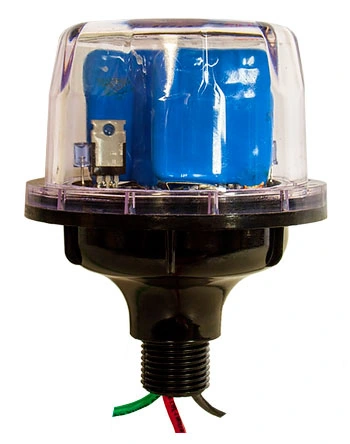
When I’m helping a customer plan surge protection, I don’t start by asking, “Which MNSPD number do you want?” I start with a simpler question: What circuit are we protecting?
That matters because the MidNite Solar MNSPD family is not one identical device with four labels. The models are built around different circuit types and voltage ranges. Choosing the right one helps the protector stay quiet during normal operation while being ready to respond when a damaging transient appears.
Match the protector to the electrical path
For a small battery circuit—such as a 12-, 24-, or 48-volt battery bank—the MNSPD-115 is the model MidNite identifies for that job. For a typical 120/240-volt alternating-current (AC) service or inverter circuit, the MNSPD-300-AC is the natural starting point.
On the photovoltaic (PV) side, the choice changes. MidNite identifies the MNSPD-300-DC for off-grid PV combiners and charge-controller inputs up to 300 volts direct current (DC). The MNSPD-600 is intended for higher-voltage grid-tied PV combiners and inverter input circuits, including systems in the 600-volt class.
That gives you a useful first map:
- MNSPD-115: battery circuits and lower-voltage AC applications.
- MNSPD-300-AC: 120/240-volt AC circuits.
- MNSPD-300-DC: off-grid PV and charge-controller inputs up to 300 VDC.
- MNSPD-600: higher-voltage grid-tie PV and inverter inputs.
There is one useful bit of flexibility here. MidNite’s SPD explanation says the MNSPD-300-DC can also be used on 120/240-volt AC arrangements because it responds to the voltage difference between the two hot legs. I would not use that as a reason to ignore the AC or DC label. It simply means the exact circuit arrangement matters more than the product name alone.
Why the voltage check deserves attention
The number in the model name is a starting point, not the entire design check. MidNite’s documents list the intended application range, maximum operating voltage, and maximum continuous operating voltage (MCOV) separately. Those terms are related, but they are not interchangeable labels.
In plain English, the protector’s continuous-voltage limit must be suitable for the circuit during normal operation. If the rating is too low, the MNSPD can interpret normal system voltage as an overvoltage event and begin shunting current. That can shorten the protector’s life and create a problem where you expected protection.
For solar, I also want the installer to account for the array’s worst-case voltage—not just the number you see during an ordinary sunny afternoon. A cold-weather open-circuit-voltage calculation may be higher than the panel voltage you normally observe. That calculation belongs in the final design before anyone chooses the DC model.
Use the exact rating label and applicable MidNite manual for the unit being installed. That is especially important when a PV string is close to a model limit or when an inverter has a less-common grounding arrangement.
A practical Hawaii example
Suppose you have a 48-volt battery bank, a 120/240-volt inverter output, and an off-grid solar array feeding a charge controller. Those are three different electrical paths. One MNSPD may not be the correct answer for all three.
I would look at the battery circuit separately, the inverter’s AC side separately, and the PV input separately. The battery may point toward the MNSPD-115. The 120/240-volt AC path may point toward the MNSPD-300-AC. The PV side may point toward the MNSPD-300-DC if the calculated array voltage stays within that model’s application range.
That is the benefit of treating surge protection as part of the system design instead of as an accessory added at the end. The protector follows the power path, and each path gets evaluated by its own voltage and circuit type.
Placement is part of protection
Once the model is selected, location matters. MidNite’s manual calls for the MNSPD to be installed as close as physically possible to the panel or equipment being protected, with connection leads kept as short and direct as practical. Long, coiled, or sharply bent conductors add impedance during the very fast event the protector is trying to control.
The MNSPD’s blue indicators are also useful for ownership. They show that voltage is present on the monitored legs. On a PV circuit, the lights can go out at night because the array is no longer producing voltage; that alone does not mean the protector has failed. If the circuit is energized and the expected indicators remain off, that deserves attention.
MidNite lists a Type 4X environmental rating for the MNSPD family and a five-year warranty. Those are practical advantages in Hawaii, where equipment may face salt air, rain, heat, and strong storm activity. They don’t replace a proper enclosure, grounding system, or qualified installation, but they make the MNSPD easier to place into a real solar design.
My recommendation is to send me the inverter model, battery voltage, charge-controller model, and the PV string voltage before choosing an MNSPD. I can help match the protection to the actual circuit instead of guessing from the word “solar” or from the model number alone. Contact SolarMan and we’ll work through the right fit for your system.