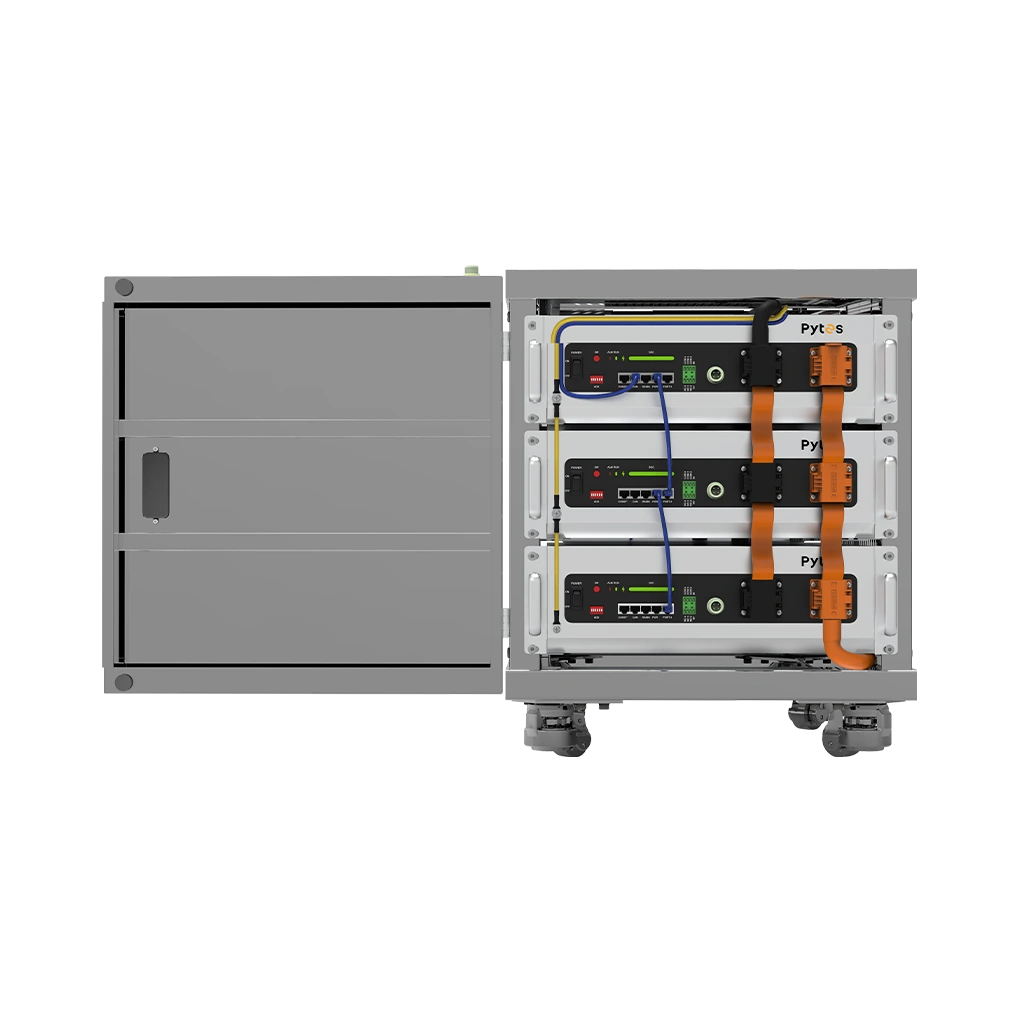
One Pytes V5 gives us a clear starting point: 5.12 kilowatt-hours of nominal stored energy in a 51.2-volt, 100 amp-hour lithium iron phosphate battery. I like that straightforward format because it makes the first conversation easier. We can start with one module, then decide whether your home needs more energy, more battery-side power, or both.
The important part is not to confuse battery energy with inverter power. Energy tells us how long the bank may support a load. Power tells us how much the battery and inverter can deliver at one time.
Start with energy, then check power
The V5’s nameplate energy comes from a simple calculation: 51.2 volts × 100 amp-hours = 5.12 kilowatt-hours. That is the battery’s nominal storage. It is not a promise that every watt-hour will reach your appliances, because the inverter has losses and the system may hold back some energy to protect the battery.
The V5 datasheet lists 75 amps as its recommended continuous charge and discharge current. At the nominal battery voltage, that is about 3.84 kilowatts of battery-side power. It also lists a higher maximum continuous current, but I don’t use that number as if it were the inverter’s guaranteed AC output. The inverter, battery-management system, temperature, wiring, and surge requirements still set the practical limit.
That distinction matters with real Hawaii loads. A refrigerator, lights, internet equipment, and a few outlets may be manageable with a modest essential-load panel. An air conditioner, well pump, electric range, or workshop tool can demand much more power for a shorter period. The battery bank and inverter have to be sized for both situations.
What adding V5 batteries changes
Pytes permits V5 batteries to be connected in parallel, not in series. Parallel expansion keeps the nominal system voltage at 51.2 volts while increasing the total stored energy and available battery current. Two V5 batteries provide 10.24 kWh of nominal energy. Three provide 15.36 kWh.
Here is a simple backup example. Suppose your essential-load panel averages 1.5 kilowatts during an outage. One V5 gives a rough nameplate calculation of 5.12 ÷ 1.5, or about 3.4 hours before inverter losses, reserve settings, temperature, and battery-management limits. Two batteries double the nameplate energy to 10.24 kWh, so the same simple division gives about 6.8 hours.
That is a planning example, not a runtime guarantee. If your main concern is longer evening coverage, additional batteries may be the answer. If your concern is starting a large motor or running several loads at once, the inverter’s surge rating and the bank’s allowable current matter just as much.
Parallel batteries need balanced planning
When I plan multiple V5 batteries, I pay attention to the power and communication connections together. Pytes calls for matching cable length, thickness, material, and resistance in parallel connections so the batteries share current more evenly. The exact busbar, overcurrent protection, and conductor arrangement belong in the system design rather than being guessed from a picture.
Pytes also documents a master-and-slave communication arrangement for multiple batteries. The bank can communicate with a compatible inverter through Controller Area Network, or CAN, or through RS-485, depending on the inverter and approved communication method. The inverter must support the battery’s communication protocol and recognize the battery-management information. A power connection alone is not the complete commissioning plan.
Before I promise a battery match, I want the exact inverter model. I also want to know the number of batteries, the planned cabinet or rack, and whether the installation location is indoors or outdoors. The bare V5 module is an IP20 component; Pytes distinguishes it from its cabinet and enclosure options. An outdoor installation therefore needs the appropriate enclosure, not simply a rack battery placed outside.
Why the modular approach can fit
I like the V5 when a customer wants a conventional 48-volt-class battery platform with a clear path to expand. One battery may suit a smaller essential-load plan. Two or more may make sense for longer backup or a larger inverter. That does not mean starting small is always best. Sometimes installing the complete bank at the beginning gives you a better-balanced system and avoids revisiting the layout later.
For a helpful general lesson, Battle Born Batteries' How to Wire Batteries in Parallel explains why parallel connections keep the system voltage the same while increasing capacity and current capability. It is not a review of the Pytes V5, but it gives a clear visual explanation of the principle. Your actual V5 bank still has to follow Pytes documentation and the inverter manufacturer's compatibility requirements.
If you are comparing battery options for a Hawaii home, cabin, or small commercial system, contact SolarMan with your inverter model, essential-load list, and the space available for the battery bank. I can help you decide whether one Pytes V5 is enough, whether parallel batteries are the better fit, and where the battery’s energy and power limits belong in the full system design.