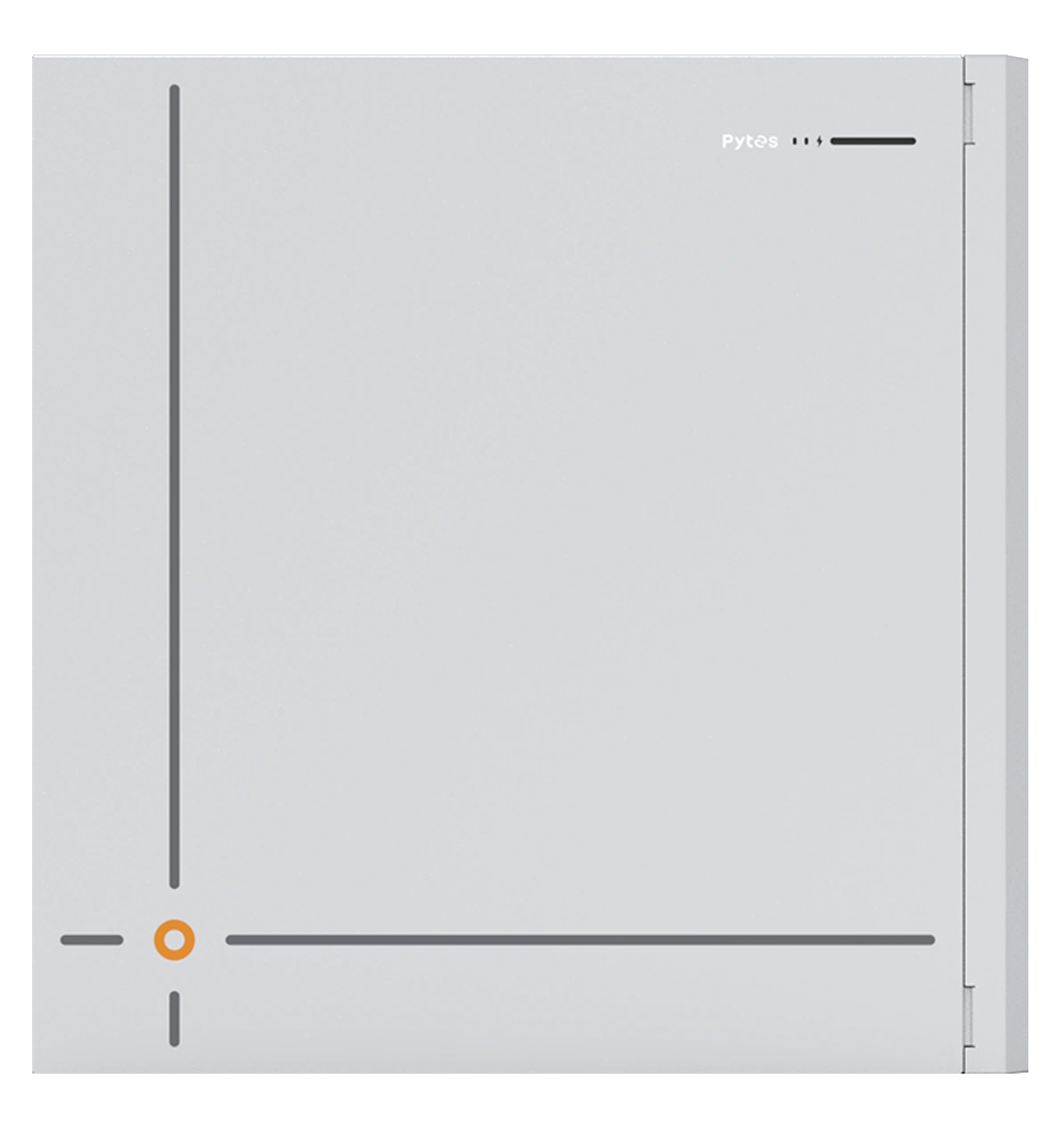
When I’m helping someone plan a serious battery system, I don’t want to talk only about how many kilowatt-hours fit inside the box. I also want to know whether the battery and inverter can communicate clearly after the equipment is installed. That is one reason the Pytes V16 Outdoor LFP Battery is worth considering.
The V16 is rated at 16.07 kilowatt-hours of nominal energy in a 51.2-volt lithium iron phosphate, or LFP, battery. That gives you a substantial starting point for whole-home backup, an off-grid system, or a smaller commercial installation. It’s a nameplate starting point, though—not a promise that every stored kilowatt-hour reaches your loads without system losses or operating limits.
The battery and inverter need the same conversation
Closed-loop communication means the battery management system can send operating information to a compatible inverter instead of leaving the inverter to guess from voltage alone. The V16 offers CAN, RS485, Wi-Fi, and dry-contact interfaces. Which one matters depends on the inverter model and the approved integration method.
That matters because a 51.2-volt battery does not behave like one fixed voltage from empty to full. Its voltage changes as it charges and discharges, while the battery management system is also watching temperature, current, and cell protection limits. A compatible inverter can use that information to manage charging and discharging more intelligently.
I still treat compatibility as a design question, not a marketing assumption. The exact inverter model, firmware, communication cable, battery profile, and Pytes settings all need to match. A battery can have the right voltage and still need the correct communication protocol before the system is ready for normal operation.
Commissioning is where the value becomes practical
A good commissioning process confirms more than “the battery turned on.” The installer should verify that the battery is recognized, the selected battery type is correct, the inverter is receiving state-of-charge information, and no communication or protection alarms remain active.
For example, Solis publishes a specific Pytes V16 commissioning guide for its 16K low-voltage hybrid inverter. That guide includes selecting the Pytes battery profile, checking communication, updating inverter firmware, and reviewing battery state of charge, grid, and load information on the monitoring screen. The exact menu names will differ with another inverter, but the principle is the same: commissioning should prove that the complete system understands the battery.
If you want to see how the pieces fit physically, Pytes’s V16 Installation Guide walks through unboxing, mounting, the conduit box, inverter placement, communication wiring, and startup. I’d use it as a visual companion to the project—not as a substitute for the exact inverter manual and local installation requirements, because the communication settings change with the inverter.
This is also why I like giving customers a clear handoff. You should know where the battery state of charge appears, what a normal operating screen looks like, and which alarms deserve a call before you need backup power. Monitoring is much more useful when it starts with a correctly commissioned system.
Outdoor-ready does not mean location does not matter
The V16 is designed for indoor or outdoor use, with an IP66 enclosure and C4-M corrosion resistance listed in the current datasheet. It can be wall-mounted or ground-mounted, although ground mounting requires the appropriate additional bracket. Those features can make the battery easier to place when indoor wall space is limited.
Hawaii still gives us practical site questions to answer. We need to consider direct sun, drainage, salt air, service access, wall strength, clearances, and the route for the battery and communication cables. IP66 protection is valuable, but it does not turn poor placement into good placement.
The V16 also includes an internal heating film for low-temperature charging conditions. That feature is more important in cold climates than in most Hawaii locations, but it shows the battery is designed with environmental operating conditions in mind. Pytes states that external charging power is required for the heating film to operate, so it should not be treated as an independent source of energy.
One battery can be a serious starting point
The V16’s recommended continuous discharge level is 150 amps, or about 7.68 kilowatts at its nominal voltage. Its maximum continuous discharge rating is 200 amps, or about 10.24 kilowatts. I use those numbers to begin matching the battery to the inverter and the customer’s loads—not to promise that every home can run every appliance at once.
A well-planned system may use one V16 for essential loads, or several V16 batteries in parallel when the customer needs more stored energy and more battery-side power. The V16 datasheet identifies expansion up to 16 units in parallel, but the inverter, bus equipment, protection, communications, and local installation requirements still have to support the complete bank.
My recommendation is to choose the inverter and loads at the same time as the battery. If you’re considering the Pytes V16 for a Hawaii home, cabin, or off-grid system, contact SolarMan and let’s compare your actual loads, inverter model, installation location, and backup goals. That is how we determine whether the V16 is simply a large battery—or the right battery for the system you want to own.