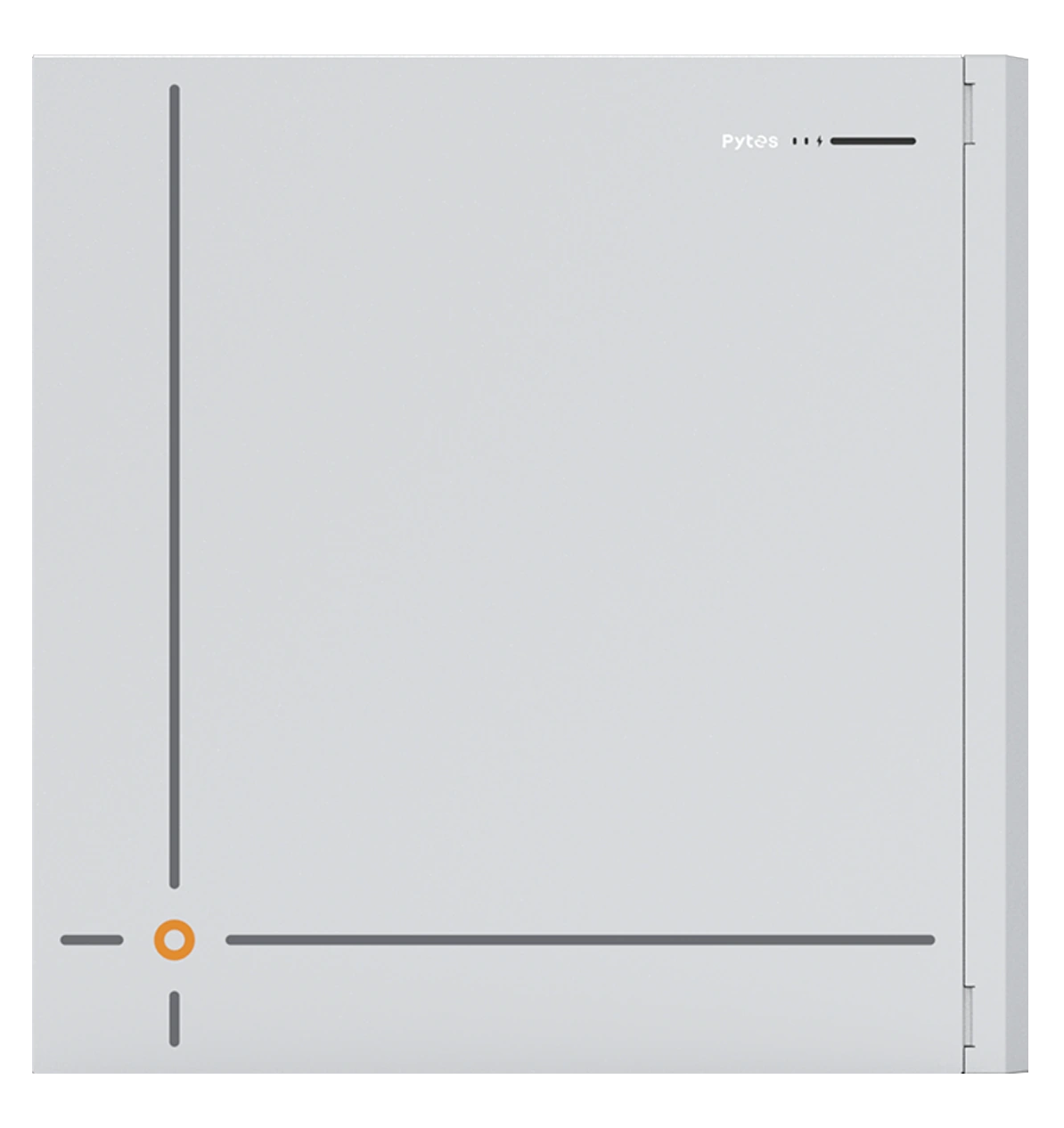
When I recommend a battery for a Hawaii home, I’m not only looking at stored energy. I also want to know how the battery watches its cells, controls current, handles inverter startup, responds to an abnormal condition, and holds up in the location where we actually need to install it.
That’s why the Pytes V16 gets my attention. It gives you 16.07 kilowatt-hours of nominal energy in a 51.2-volt lithium iron phosphate (LFP) battery, with protective electronics and physical protection built around the cells. The result is a battery platform that can make sense for whole-home backup, off-grid work, or a small commercial system when the inverter and site are matched correctly.
Protection starts with watching the battery
The V16’s battery-management system, or BMS, monitors the battery’s operating condition. Pytes lists functions including charge and discharge cutoffs, over-voltage and under-voltage protection, over-current protection, high- and low-temperature protection, short-circuit protection, and reverse-connection protection.
For everyday planning, Pytes lists a recommended charge current of 125 amps and a recommended discharge current of 150 amps. At the nominal 51.2-volt battery voltage, those work out to approximately 6.4 kilowatts of charging and 7.68 kilowatts of battery-side discharge power. Those are useful planning numbers, not guarantees that every inverter or load can use them.
The current V16 manual also lists 200 amps as peak discharge current for 180 seconds. Pytes’ product page lists 200 amps as the maximum discharge current. I would not describe that as 200 amps of continuous charge and discharge capability, because the charge, recommended discharge, and short-duration discharge ratings are different jobs.
Several layers handle different problems
One feature I like is the integrated pre-charge circuit. An inverter has capacitors that can demand a large inrush current when it first connects to the battery. Pre-charge control lets those capacitors energize more gradually before the main connection is completed, reducing stress during startup.
The V16 also has a direct-current breaker, a fuse, and a shunt-trip function. A shunt-trip breaker can open in response to an electrical signal, giving a properly designed emergency-shutdown arrangement a way to disconnect the battery from the equipment. The breaker, BMS controls, and fuse are not identical protections. They respond in different ways and provide layers rather than one single safety function.
Inside the battery, Pytes also shows shunt-based current measurement and an intelligent current-limiting function. In plain language, the battery has another way to measure current and can physically limit charging if the actual current is too high for the battery’s requested condition. That extra layer is valuable when the battery is nearly full or when communication with the inverter is not behaving as it should.
Outdoor-ready is useful in Hawaii
The V16 has an IP66 enclosure. That means it is dust-tight and protected against powerful water jets under the applicable test classification. Pytes also identifies a C4-M corrosion-resistant design, which is relevant when we’re thinking about humid or coastal locations.
IP66 still does not mean “put it anywhere.” I want proper mounting, drainage, service access, protection from impact, and a layout that follows the current Pytes and inverter instructions. The manual calls for avoiding direct sunlight and standing water, and it gives installation-clearance and environmental requirements that should be part of the site plan.
One protection detail deserves a closer look
Pytes presents an aerosol fire-suppression module as part of the V16 protection architecture. The current manual identifies that module as an optional accessory on some configurations, so I would confirm that the exact battery supplied for your project includes it. If it is included, it adds an emergency response layer; it does not replace correct temperature limits, communication settings, clearances, or qualified installation.
Pytes rates the V16 for up to 8,000 cycles under stated test conditions and provides a 10-year warranty. Those figures are useful, but the battery still has to be operated within the limits of the exact inverter, wiring, charging profile, and site. A well-designed system lets the BMS, inverter, breaker, and other protections work together instead of forcing one component to carry the whole responsibility.
The official Pytes deep-dive video, Inside the Pytes V16, gives you a useful look inside the battery. Logan walks through the communication wiring, shunt-based current measurement, breaker, fuse, pre-charge circuit, current limiter, heating pads, cells, fire-suppression hardware, and outdoor enclosure. It’s a good lesson if you want to understand why I’m looking at the V16 as a complete energy-storage platform, not just a large box of cells.
If you’re considering a Pytes V16 for whole-home backup, an off-grid system, or a coastal Hawaii installation, send me the inverter model, the loads you want backed up, and where the battery would go. I can help you decide whether the V16’s energy, battery-side power, protection layers, communication path, and outdoor design fit the system you’re actually building.