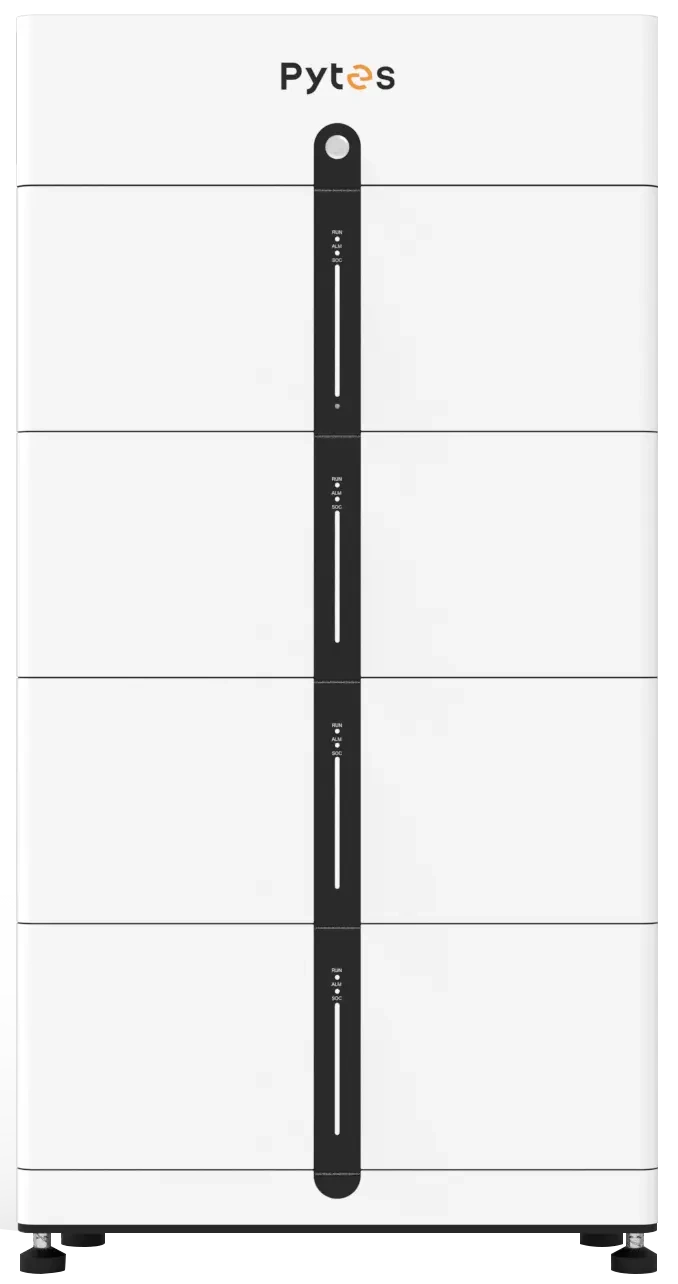
What I like about the Pytes Pi LV1 is that it treats the battery as part of a complete system, not as a silent box connected to an inverter. The stack includes Pi LV1 Battery Management Units (BMUs), a Pi LV1 Battery Control Unit (BCU), and communication options that let a compatible inverter understand the battery’s operating condition.
That matters in a Hawaii backup system. The battery stores energy, but the inverter is responsible for turning that stored energy into usable household power. The two pieces need to agree about when charging is allowed, how much power the battery can provide, and when the system needs to protect itself.
The first planning question is energy versus power
Each Pi LV1 BMU is a 51.2-volt lithium iron phosphate, or LFP, battery module with 5.12 kilowatt-hours of nominal energy. Stack two BMUs and the nameplate energy becomes 10.24 kilowatt-hours. Three gives you 15.36 kilowatt-hours, and six gives you 30.72 kilowatt-hours.
Those numbers help us estimate how long selected loads may run, but stored energy is not the same thing as inverter output. Pytes lists 5.12 kilowatts of recommended power for a two-BMU configuration. That is a useful battery-side planning number. It does not mean every inverter should be set to pull 5.12 kilowatts continuously, or that the battery will deliver that amount under every temperature and operating condition.
That is why I look at refrigeration, pumps, communications equipment, lighting, and other loads together. We need to know both how much energy they use over time and how much power they may demand at the same moment.
What the BCU adds
I think of the BCU as the coordinator for the stack. The BMUs monitor their battery modules, while the BCU gathers the system information and provides the outside communication path. The Pi LV1 documentation lists CAN, RS485, Wi-Fi, and dry-contact interfaces.
The inverter connection is the important part of the battery conversation. Depending on the approved inverter integration, that communication may use CAN or RS485. Wi-Fi serves a different purpose: Pytes documents it for remote battery-data viewing and firmware updates. It should not be confused with the inverter’s battery-control communication link.
With a proper closed-loop connection, the inverter can use battery information and operating limits instead of relying only on a fixed voltage-only charging plan. That can make the system more responsive when the battery is nearly full, approaching its discharge limit, or reporting a protection condition.
Compatibility has to be checked by exact model
Pytes publishes compatibility information for low-voltage inverter platforms, but I never treat a brand name as the whole answer. The exact inverter model, approved battery profile, communication method, cable arrangement, and firmware requirements still need to match.
For example, Pytes provides a specific Pi LV1 configuration guide for Sol-Ark. That guide shows the kind of commissioning detail I want to see: the battery is powered before the inverter, the inverter is configured for the battery, and the system is checked to confirm that battery information is appearing correctly.
Other inverter brands may use different settings or a different communication port. So the question is not simply, “Is this a 48-volt inverter?” The better question is, “Is this exact inverter approved and configured for this exact Pi LV1 system?”
What this looks like for a customer
Suppose you want backup for a refrigerator, internet equipment, lights, and selected pumps. I would start by estimating the loads and deciding how long you want them supported. Then I would choose a practical BMU count, compare the battery’s recommended power with the inverter’s battery requirements, and check the approved communication path.
I would also want to see normal battery information on the inverter before calling commissioning complete. An inverter turning on is not the same as a successful battery handoff. The useful result is a system in which the battery, BCU, inverter, and monitoring platform all agree about what the battery is doing.
If you want a broader explanation of this idea, Victron Energy’s educational lesson on its Lithium NG battery and Battery Management System shows how battery communication and BMS functions fit into a larger storage system. It is not a review of the Pytes Pi LV1, but it gives you a good picture of why the battery and inverter need to work as a team.
The Pi LV1’s stackable format is helpful when you want to size storage around real loads or leave room for a planned expansion. For me, the bigger value is the organized architecture behind the modules: BMUs that monitor the battery, a BCU that coordinates the stack, and a defined communication path to a compatible inverter.
If you’re considering Pytes Pi LV1 for a Hawaii home, business, or backup system, contact SolarMan. Bring me the inverter model, the loads you want protected, and whether you expect to expand later. I’ll help you decide whether the Pi LV architecture fits the job and how many BMUs make sense for the system you actually want.