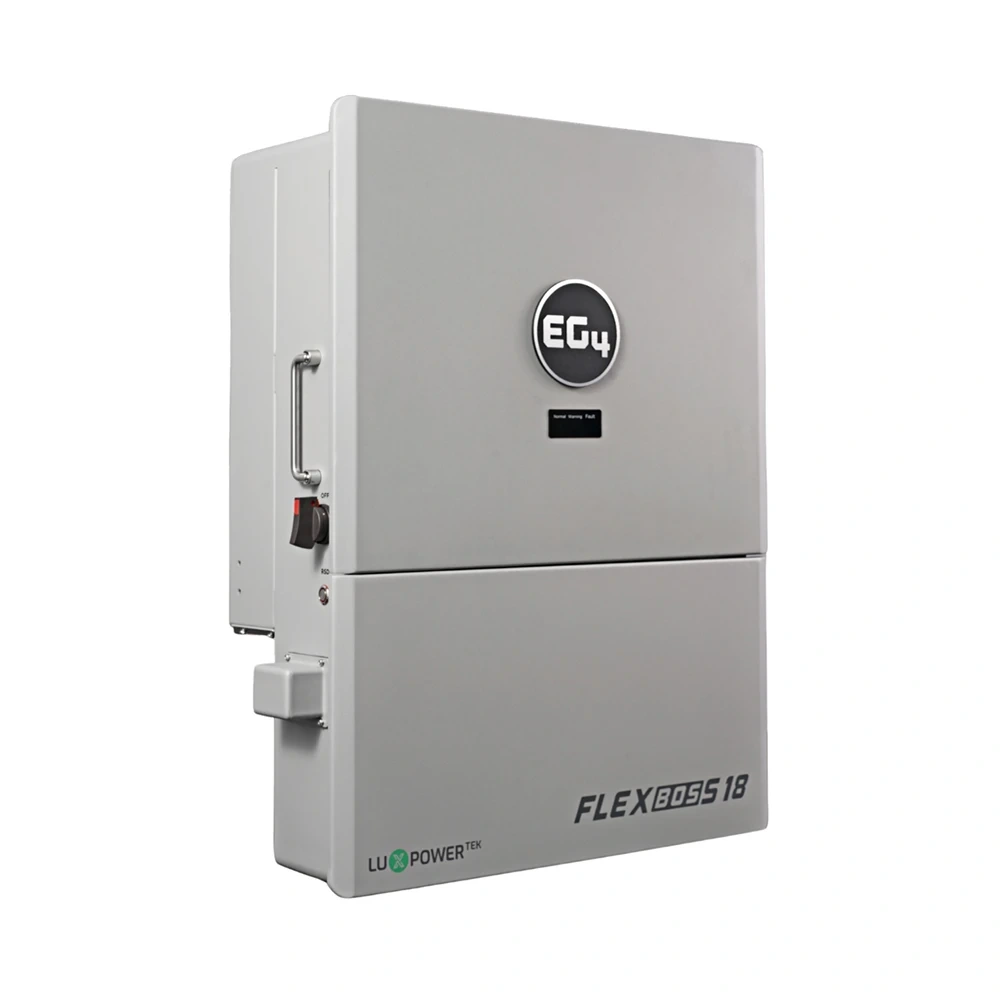
One reason I like the EG4 FlexBOSS18 is that it gives us more ways to decide what your solar power should do. Add an EG4 GridBOSS, and selected household loads can follow a plan instead of simply running whenever somebody happens to turn them on.
That can be useful in a Hawaii home with a water heater, air conditioner, or electric-vehicle charger. These loads may be important, but they usually have more scheduling flexibility than a refrigerator, medical equipment, communications gear, or a pump you need at a specific moment.
What the GridBOSS Smart Ports add
The GridBOSS has four programmable Smart Ports. EG4 rates them at 125 amps, 80 amps, 60 amps, and 60 amps, depending on the port. Those are maximum connection ratings—not a recommendation that your home should place a load of that size on one port.
I still want the actual load, breaker, conductors, equipment requirements, and local electrical rules reviewed together. A Smart Port is a controlled place for a flexible load. It isn’t permission to oversize the load or skip the rest of the system design.
Make a water heater a flexible load
Picture a sunny afternoon. The home’s ordinary loads are operating, the battery has reached the state-of-charge level you chose, and photovoltaic production is available. A properly selected water-heating circuit could be allowed to operate during that window.
If the programmed conditions change, the Smart Port can turn the load off or shed it. That does not create more solar energy, and it does not guarantee that the water heater always runs before the battery charges. It gives us a way to make a flexible load follow the operating rules we choose.
EG4 describes Smart Loads as devices controlled according to grid presence, battery state of charge, time-of-use settings, and the presence or level of photovoltaic power. State of charge means the battery’s estimated remaining charge. Time of use means a schedule that allows or prevents operation during selected hours.
Choose the right loads for the job
I would usually start with a load that can wait: water heating, electric-vehicle charging, or selected air conditioning. Those loads can be useful during strong solar production, but they don’t deserve the same priority as lighting, refrigeration, communications, or other circuits you want preserved during an outage.
That distinction matters even more because the FlexBOSS18 has separate operating limits. EG4 lists up to 18 kilowatts of usable photovoltaic input, 13 kilowatts of continuous output when photovoltaic power is available, and 10 kilowatts of battery-only output. Those are different operating conditions. They are not three amounts you simply add together.
A large air conditioner may be reasonable during a bright part of the day and still be a poor load to depend on overnight. The battery bank, weather, starting demand, and the rest of the home’s load profile still determine whether that plan is comfortable.
Smart Loads and AC-coupled solar are different choices
A GridBOSS Smart Port can be configured for a Smart Load or for alternating-current-coupled solar. AC coupling means an existing or new grid-tied solar inverter supplies alternating-current power into the battery-based system. That can be helpful in a retrofit, but the existing inverter’s compatibility, certification, outage behavior, and monitoring arrangement must be checked before it becomes part of the plan.
When the FlexBOSS18 is paired with a GridBOSS, EG4 says the inverter’s load port is not used for that arrangement and that the GridBOSS tracks the system’s input and output data. That is why I treat the inverter, GridBOSS, batteries, flexible loads, and monitoring plan as one coordinated system—not as separate boxes that happen to share a wall.
The video below gives a useful general lesson on the GridBOSS idea. It shows how Smart Ports can be used for alternating-current-coupled solar or for flexible loads that turn on and off according to solar input and battery conditions. Use it to understand the control concept, not as a substitute for a FlexBOSS18-specific design.
If you’re considering the FlexBOSS18, bring me your major loads and your priorities: lower daytime utility use, stronger outage reserve, electric-vehicle charging, water heating, air conditioning, or future solar expansion. I can help you decide whether a GridBOSS Smart Port belongs in the system and which load deserves that job.