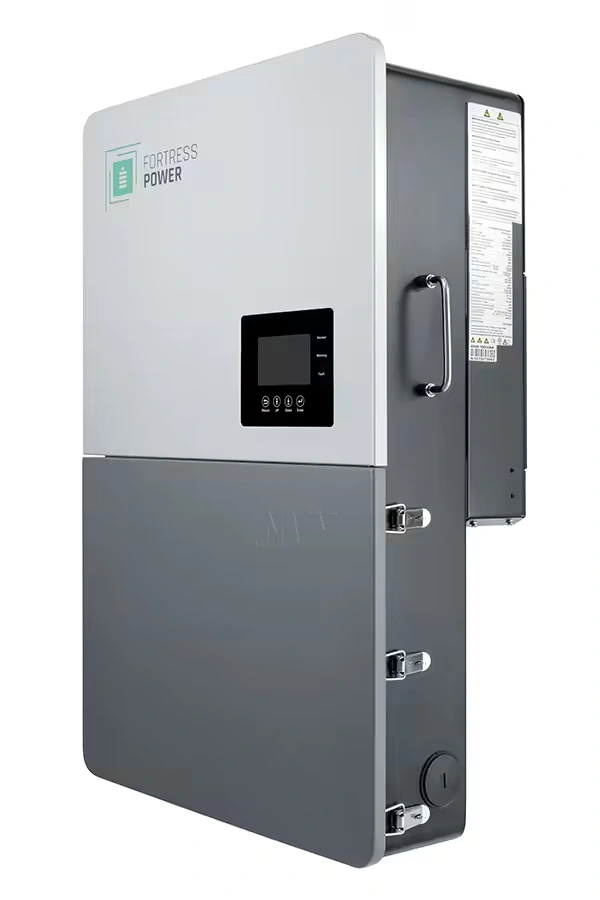
One feature I like on the Fortress Power Envy Duo 21 is Smart Load. It gives a flexible load its own operating window instead of asking that load to compete with the circuits you need every hour of the day.
In plain language, Smart Load turns the inverter’s generator-input connection point into a controlled load connection. The inverter looks at two conditions before making that connection available: battery state of charge, or SOC, and photovoltaic power, or PV power. When the configured start conditions are met, the load can turn on. When either stop condition is reached, it turns back off.
Where Smart Load fits best
Imagine a Hawaii home with solar, a 48-volt battery bank, and one load that is useful but not essential every minute of the day. The Fortress manual illustrates an electric-vehicle charger. Depending on the equipment and electrical design, a water-heating load or another controllable circuit may also make sense.
The key is that this load has permission to wait. Your refrigerator, lights, communications equipment, and other essential circuits should not have to compete with it for the same battery reserve.
The Envy Duo 21 has the capacity for a substantial solar-plus-storage system. Fortress lists up to 25 kilowatts of photovoltaic array power, 12 kilowatts of continuous battery-only backup output, and three maximum-power-point-tracking, or MPPT, channels. Smart Load adds a control decision on top of that hardware. It does not create extra inverter power, and a 300-watt start threshold does not mean a large connected load will run on 300 watts of PV alone.
The settings are easier to understand than they sound
Fortress gives a useful example in the Envy Duo 21 installation manual. If Smart Load is set to start at 90% battery SOC, stop at 85%, and require at least 300 watts of PV power, the controlled load turns on only when both start conditions are satisfied: the battery has reached 90% and PV power is above 300 watts.
Once the load is operating, the inverter continues watching those conditions. If the battery falls below 85% SOC or PV power drops below 300 watts, the Smart Load connection switches off. Those are Fortress’s example values, not settings I would automatically use for every customer.
One important distinction: the 300-watt PV setting is a gate that permits the connection to operate; it is not a promise that a larger load will be powered only by unused solar. I would choose the thresholds around your battery manufacturer’s guidance, your essential loads, the load’s starting surge, and the reserve you want available later in the day.
Why I like the separation
A battery system works better when every load has a job. Essential loads deserve priority. Flexible loads can wait for the right conditions. Smart Load lets us express that difference automatically instead of relying on somebody to watch the battery and switch an appliance on and off.
For example, you may want to make vehicle charging available during the middle of the day while still keeping a defined battery reserve for the evening. Smart Load can make that plan easier to manage by keeping the optional load off until the selected conditions are reached, then removing it when the battery reserve or PV condition falls below the stop setting.
That is different from simply putting a large appliance on the backup panel. A normal backup-panel load is expected to operate whenever it calls for power. Smart Load is conditional. The inverter decides whether that connection is available based on the solar and battery conditions you set.
The generator tradeoff matters
There is one limitation I want to make very clear. When Smart Load is enabled, an AC source or generator cannot be connected to that same connection point. Fortress warns that doing so can damage the inverter.
So the system needs to be designed for one role or the other: generator input, or Smart Load output. Do not treat that connection as interchangeable during normal operation. If generator backup is important to you, I would evaluate that use before choosing Smart Load.
What I would check before recommending it
I would start with the load itself. How much power does it need? Does it have a starting surge? Is it comfortable being switched off when clouds pass or the battery reaches its stop threshold? We also need the correct breaker protection, conductors, voltage arrangement, battery communication, and local approvals.
For a short general lesson, Victron Energy’s video Did You Know - Trigger a dump load when your batteries are full shows the broader idea of using an automatic controlled load when stored energy is available. It is not a review of the Envy Duo 21, but it gives you a simple picture of why a battery system may use a flexible load when the battery is sufficiently charged.
If you like the idea of giving an optional load a controlled place in your solar-storage system without ignoring your backup reserve, contact SolarMan. I can look at the load you want to control and tell you whether the Envy Duo 21 Smart Load function is a sensible match for your battery, solar array, and Hawaii service.