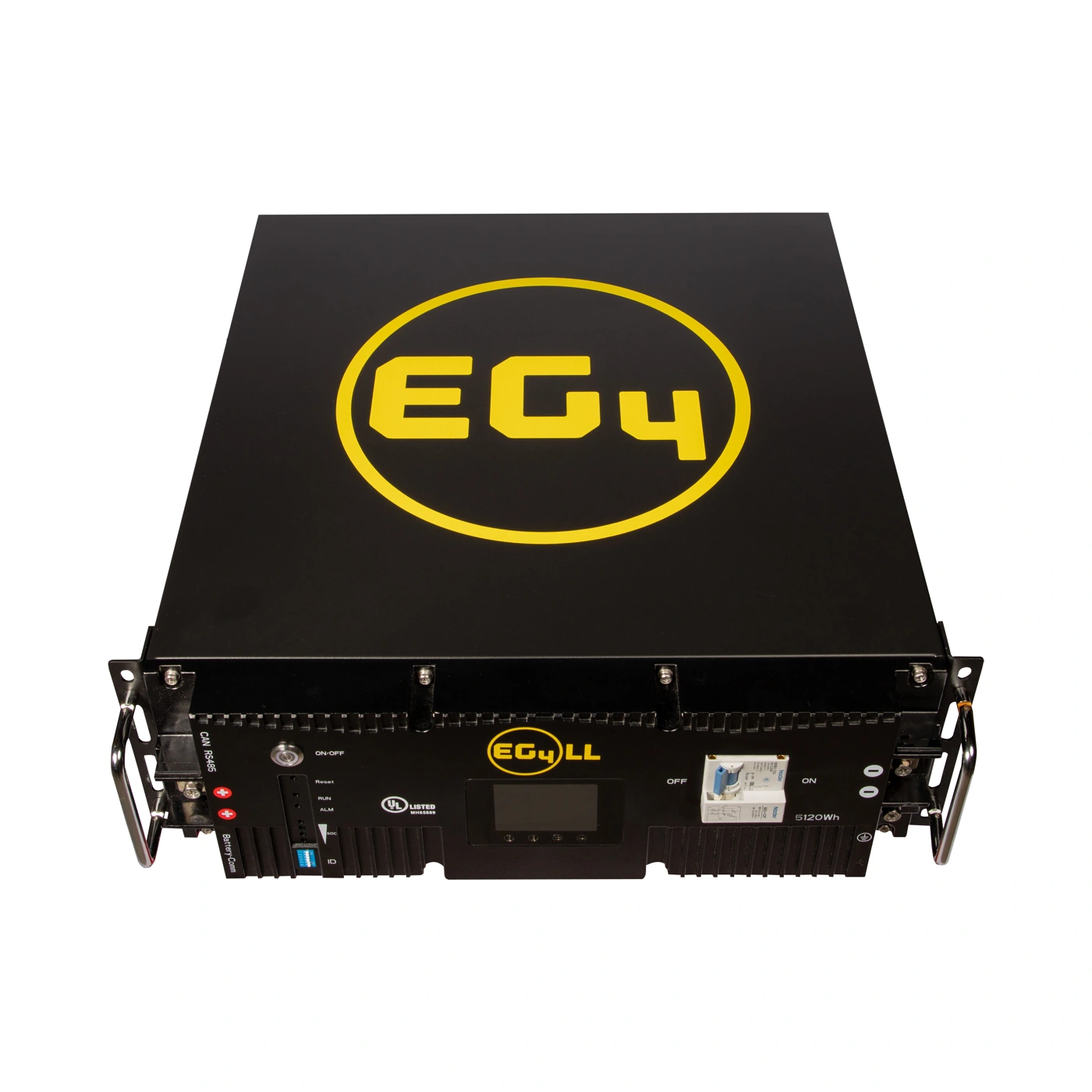
When a customer asks me how many EG4 LL-S batteries they need, I don't start with the number of kilowatt-hours. I start with the inverter and the loads. The battery bank has to store enough energy, but it also has to deliver enough power at the moment your house needs it.
That is where the LL-S becomes easy to understand. Each module is a 51.2-volt, 100-amp-hour lithium iron phosphate battery. Multiply those numbers and you get 5,120 watt-hours, or 5.12 kilowatt-hours, of nameplate energy. That's a useful starting point, but it is not the same thing as saying one battery can comfortably run every load in a home.
Storage and power are two different decisions
EG4 lists 100 amps as the LL-S's maximum continuous charging and discharging current, while its recommended setting is 50 amps. At the nominal battery voltage, 51.2 volts multiplied by 50 amps equals about 2.56 kilowatts of nominal DC battery-side power.
That gives us a practical way to look at a bank:
- One LL-S: about 2.56 kW at the recommended 50-amp level
- Two LL-S batteries: about 5.12 kW
- Three LL-S batteries: about 7.68 kW
Those are battery-side planning figures, not guaranteed AC output. The inverter has conversion losses, its own battery-current limit, and its own rules for continuous and surge power. Still, the example shows why a 5.12 kWh battery should not automatically be paired with a large inverter at full output. Energy tells you how long the battery may last. Current helps tell you how hard it can work.
What this means for a Hawaii backup system
Imagine a customer wants backup for refrigeration, lights, internet equipment, and a few kitchen circuits. One LL-S may be a sensible starting point if the inverter and the planned loads stay within that battery's available current. If the same customer wants to run larger pumps, air conditioning, or several household loads together, I would look at the battery bank and inverter as a pair instead of assuming one module is enough.
Adding a second or third battery does more than add runtime. It increases the bank's available battery-side current while keeping the system on the same 48-volt-class platform. That can give the inverter more room to support a larger load without forcing the battery to operate at its limit. The exact number still depends on the inverter manual, the programmed charge and discharge limits, the load profile, and whether the system must provide surge power.
The rack format helps keep expansion organized
I also like the LL-S because it gives a growing system a clean path forward. The batteries are designed to operate in parallel, not in series, so the bank remains at the appropriate 48-volt level while amp-hour capacity and potential output current increase. EG4's current manual describes assigning each battery a unique address and selecting one host battery for communication with the inverter.
That communication matters. The battery management system, or BMS, monitors voltage, current, temperature, and state of charge. With a compatible inverter and the correct communication protocol, the inverter can use battery information instead of relying only on fixed voltage guesses. That makes commissioning and protection more coordinated, but compatibility must be confirmed for the exact inverter and firmware combination.
When batteries are added to an existing bank, EG4 also calls for the modules to be charged to 100% before paralleling them. That is the kind of small commissioning detail I want handled properly from the beginning. It is much easier to build a balanced bank than to troubleshoot a mismatched one later.
Where I think the LL-S fits best
I see the EG4 LL-S as a strong fit for a customer who wants a 48-volt rack battery that can begin at a practical size and grow with the system. It makes particular sense when we already know the inverter, essential loads, communication method, rack location, and future expansion plan.
If you're comparing one battery with two or three, don't compare only the storage number. Let me match the LL-S bank to the inverter's battery current, your starting loads, and the backup goal. Contact SolarMan and we'll work through the right system size before the rack is filled.
For a helpful introduction to the LL battery communication tools, EG4 Electronics also demonstrates its BMS Tools software in the video below. It is a general manufacturer lesson rather than a substitute for the current LL-S manual, but it gives you a useful look at why battery communication is part of the system design.