When a battery-backed system does something unexpected, I don’t want to start by blaming the inverter. The EG4 LL-S gives us a better first look because the battery has its own display and battery-management-system information.
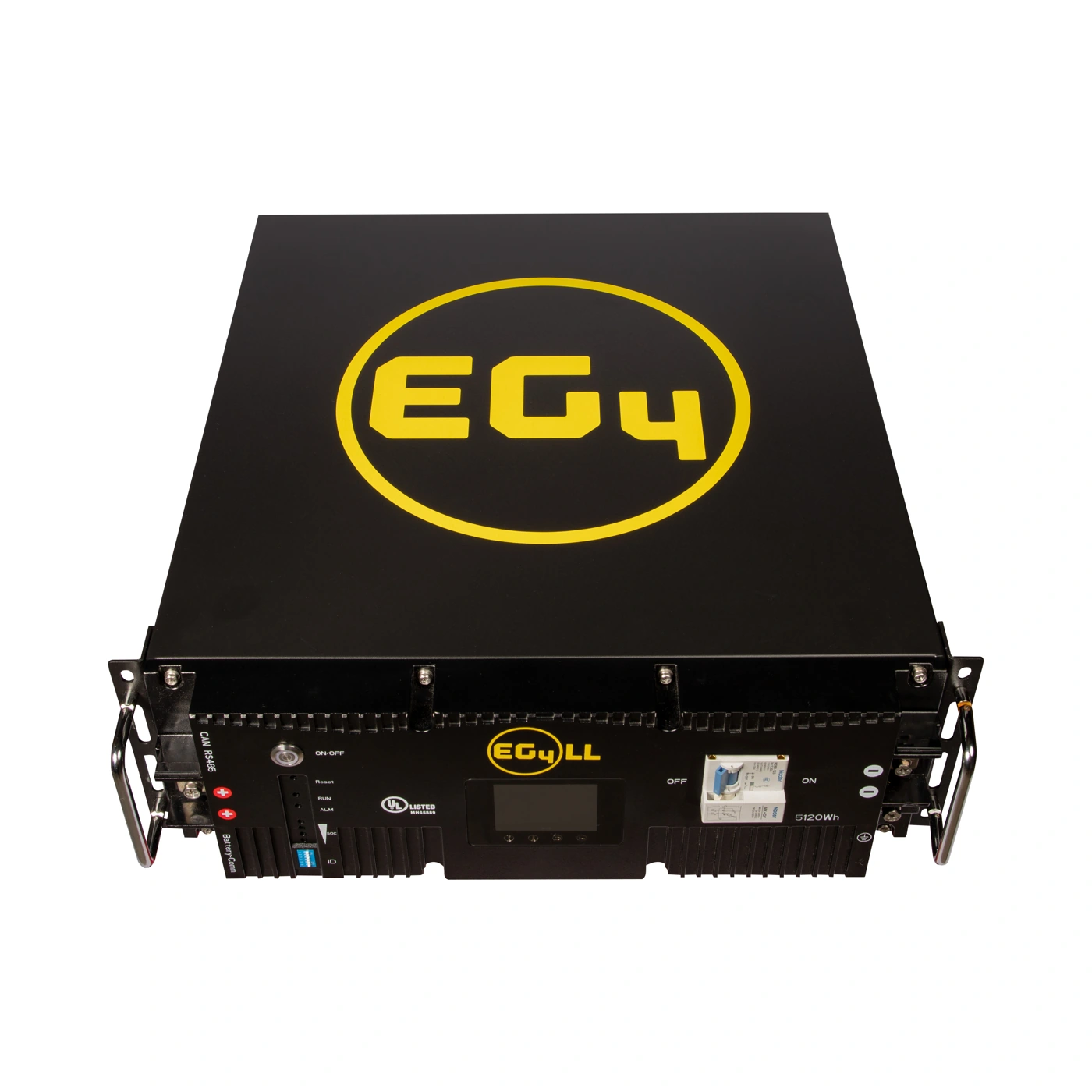
That matters in a Hawaii home. If the inverter says the battery is not charging, the LL-S can help us see whether the battery is accepting charging current, whether its temperature is reasonable, and whether the battery-management system has placed it in a protective condition.
Start with what the battery itself is seeing
The EG4 LL-S is a 51.2-volt, 100-amp-hour lithium iron phosphate battery. Multiplying those nameplate numbers gives 5,120 watt-hours, or 5.12 kilowatt-hours, of nominal stored energy. That is a useful capacity number, but it does not tell us what is happening at this moment.
The local screen can show the battery’s voltage, current, and state of charge. It can also provide cell-voltage and temperature information. Those readings answer different questions. Voltage tells us about the battery’s electrical condition. Current tells us whether energy is flowing into or out of it. State of charge gives us an estimate of how full it is. Temperature helps explain why the battery-management system may limit or stop charging or discharging.
For example, if the inverter reports no charging but the LL-S display shows that the battery is accepting charging current, the battery is receiving energy and the problem may be elsewhere in the system display or control path. If the LL-S shows no current while the inverter claims to be charging, that deserves a closer look at the charging source, settings, protection status, and communication path.
Three voltage numbers have three different jobs
Customers often see several battery-voltage numbers and wonder which one is the “right” number. The answer depends on what we’re doing.
The LL-S manual lists 51.2 volts as the battery’s nominal voltage. It lists 56.8 volts as the battery-management system’s bulk and absorb charging-voltage reference, while its recommended charging setting is 56.2 volts plus or minus 0.2 volts. The manual also lists a recommended float setting of 54 volts plus or minus 0.2 volts.
Those values are not three competing descriptions of the battery. Nominal voltage helps describe the battery family. Bulk and absorb relate to the stronger part of the charging process. Float is a lower maintenance level. The exact settings still need to match the inverter or charge-controller documentation and the system design.
Read the alarm before resetting anything
The LL-S battery-management system, or BMS, protects the cells from conditions such as excessive voltage, excessive current, and unsuitable temperatures. The battery may also protect itself when a cell or the battery pack reaches a limit.
That is why an alarm is useful information, not just an annoyance. The manual identifies conditions such as pack over-voltage, pack under-voltage, charge over-current, discharge over-current, and temperature anomalies. A charge over-current alarm points us toward the charging source or charge limit. A discharge over-current alarm points us toward the loads, inverter demand, or battery-side limits. A temperature alarm changes the conversation again.
I would rather see that information first than repeatedly cycle the battery switch and erase the clue. The right response depends on the alarm and the complete system, so qualified service should follow the manufacturer’s troubleshooting guidance.
Parallel batteries do not have to show identical percentages
If we expand the bank, the LL-S manual says that state-of-charge readings between batteries can vary by up to 10 percent during a charge or discharge cycle. That does not automatically mean one battery has lost capacity.
Small differences in cable resistance, internal resistance, temperature, and cell characteristics can make one battery carry a little more current for a while. Over a longer charge or discharge cycle, the readings can move closer together. I still want the batteries installed and commissioned correctly, but I don’t want you to panic over every temporary difference on the screens.
The communication link should tell the same story
Closed-loop communication means the battery and inverter exchange operating information instead of relying only on manually entered voltage limits. The LL-S can communicate through its Controller Area Network, commonly called CAN, or its RS-485 wired serial-communication port, depending on the approved system and configuration.
In a multiple-battery bank, EG4 designates one host battery to communicate with the inverter or other system equipment. The batteries also need unique identification settings. This is where a correct model, firmware path, communication cable, and inverter profile matter. A cable plugged into the wrong port can create a communication problem even when the battery itself is healthy.
Kvaser’s Controller Area Network (CAN) lesson is a helpful general introduction because it explains how machines exchange information over CAN. It doesn’t configure an EG4 system, but it makes the basic idea easier to understand: the battery is not merely sending power; it is also reporting useful operating data.
This is where I see the real value of the LL-S. Its 5.12-kilowatt-hour nameplate gets your attention, but the local display and BMS information make the battery easier to understand after installation. If you’re considering an EG4 LL-S bank, contact SolarMan and I’ll help match the battery count, inverter communication path, rack arrangement, and monitoring plan to the system you want to run.