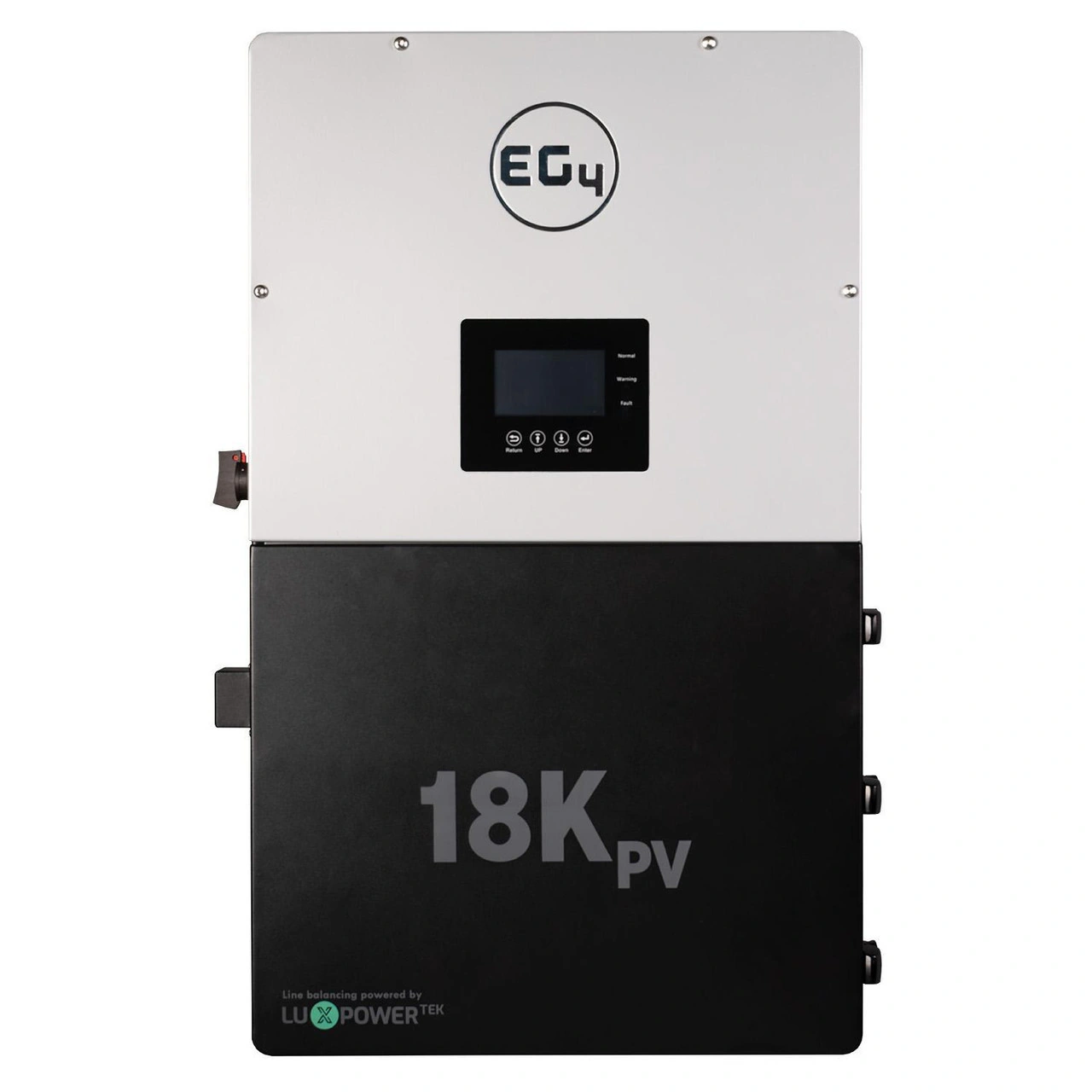
A generator is useful when the weather stays cloudy or the utility is out, but many generators have an awkward limitation: the house may need more power than the generator can comfortably provide at one moment. That’s where the EG4 18kPV gets interesting. With its Generator Boost feature, the inverter can combine generator power with battery and photovoltaic (PV) power instead of asking the generator to handle every large load by itself.
I like that approach for the right Hawaii backup system because it gives the generator a more manageable job. The generator can recharge the battery and carry a steady portion of the household load, while the battery and solar array help cover short periods of heavier demand.
What the 18kPV is actually doing
The EG4 18kPV is a 12,000-watt split-phase hybrid inverter with a 48-volt battery connection. Its generator input is designed for a 120/240-volt, 60-hertz generator with total harmonic distortion below 3 percent. The exact generator choice still needs to match the backed-up loads, the battery bank, and the installation documentation for the equipment being used.
When the generator is running, the inverter can pass generator power through to the backed-up loads while charging the battery. If the loads temporarily ask for more power than the generator can provide, the battery can supplement it. With Generator Boost enabled, the 18kPV can also pull supplemental power from both the PV array and battery when generator power is not enough.
That doesn’t mean a small generator becomes a 12-kilowatt generator. It means the system has more than one source available at the same time. The generator still needs to be correctly sized and approved for the inverter’s generator input.
A simple example with real numbers
Let’s say a customer has an 8-kilowatt generator. EG4’s Generator Boost guide recommends setting “Max. Generator Input Power” to 80 percent of the generator’s total output. The starting calculation is 8 kW × 0.80 = 6.4 kW.
That setting gives the generator some operating headroom instead of asking it to run continuously at its absolute limit. If a well pump, refrigerator, and other household loads briefly push demand above that level, the battery and available solar can help carry the difference. The exact result still depends on battery state of charge, PV production, load size, and the rest of the system settings.
The battery bank still matters
Generator Boost works best when the battery bank is large enough to handle the loads that come and go quickly. EG4 lists a maximum battery charge and discharge current of 250 amps and recommends at least 300 amp-hours of battery capacity per inverter.
That recommendation is not a promise that every battery bank can deliver the full inverter output. The battery model, battery-management-system limits, communications, and installation design all matter. For a customer, the practical question is whether you want the battery to cover short surges, run selected loads overnight, or carry most of the home during a long outage. Those are different designs.
Automatic starting makes the system easier to live with
The 18kPV supports a two-wire generator-start signal. Depending on the selected operating mode, the system can start the generator based on battery state of charge or battery voltage. It can stop the generator after the battery reaches the programmed charge-end condition.
One practical detail is easy to miss: EG4’s Generator Boost guide says that enabling the feature in the Monitor Center is limited to installer or distributor accounts. That’s a good reason to treat this as a commissioning decision, not a casual homeowner app setting.
The generator’s start controls, fuel system, warm-up behavior, and shutdown requirements still need to be compatible with the inverter and configured by the installer. The generator also needs clean, stable power. A bargain 120-volt portable generator is not automatically a match for this input.
Keep the generator input within its limits
There’s another important limit beside the recommendation. The generator pass-through relay is rated at 90 amps, and EG4 says the total load and charging current must stay within that limit while the generator is operating.
This is one reason I don’t judge a backup system by inverter size alone. The generator, battery bank, load panel, charging settings, and automatic-start controls all have to work together. A good design may let a smaller generator run at a steadier, more useful level, but it still has to handle the system’s continuous requirements and power quality.
Where I’d consider this setup
I’d look seriously at the EG4 18kPV when a customer wants solar and batteries for everyday use but also wants a generator for long cloudy periods, storm outages, or an off-grid location. The Generator Boost feature is especially useful when the generator is strong enough for the planned system but isn’t intended to carry every short-lived household surge by itself.
The next step is to list the loads you want backed up, identify which ones start with a motor, and match the generator, battery bank, PV array, and settings as one system. Contact SolarMan and I can help you decide whether the EG4 18kPV fits your backup plan and what equipment needs to be coordinated with it.