One reason I like the EG4 12kPV is that it gives a well-planned solar array room to work without forcing every roof section into the same electrical arrangement. It has two independent maximum power point tracking inputs, commonly called MPPTs. That matters when one part of a Hawaii roof faces a different direction, has a different tilt, or sees a different shade pattern than another.
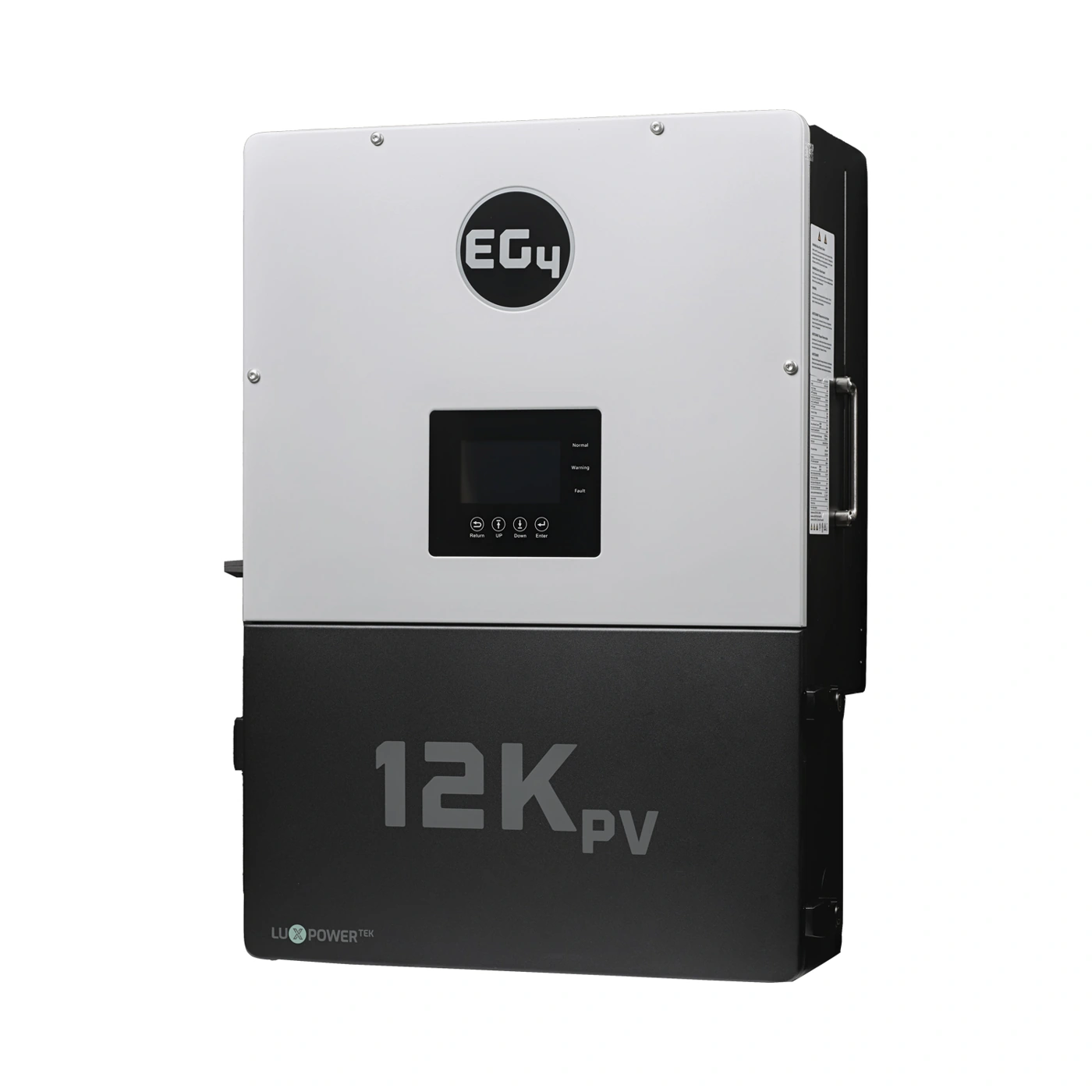
The useful lesson is to plan the photovoltaic (PV) array from the panel specifications, not from the panel wattage alone. The 12kPV can utilize up to 12,000 watts of solar input, and EG4 lists 15,000 watts as the recommended maximum solar input. That does not mean every customer should install 15 kW of panels. It means the inverter has room for a larger array when the roof, battery bank, loads, and local production goals justify it.
Start with the two MPPT inputs
If your roof has two useful sections, I would first ask whether each section deserves its own MPPT. Each 12kPV MPPT is listed with a 25-amp maximum usable input current. EG4 also lists a 31-amp maximum short-circuit input current for each MPPT. Those numbers describe different checks.
Maximum-power current, or Imp, is the normal operating-current figure from the module or string. Short-circuit current, or Isc, is the fault-condition figure used in equipment and protection checks. I don't treat 25 amps and 31 amps as interchangeable. Both need to be checked against the exact modules, the string arrangement, and any parallel-string current increase.
For a simple planning example, a 15,000-watt array divided evenly between the two inputs would be about 7,500 watts per MPPT. That arithmetic only describes the power split. It does not prove that the voltage or current fits. The panel's voltage and current numbers still decide whether the arrangement is suitable.
Use voltage for the string length
EG4 lists a 100-volt direct-current startup voltage, a 120-to-500-volt MPPT operating range, and a 600-volt maximum input voltage. I want the normal operating voltage inside the 120-to-500-volt tracking range, not merely below 600 volts.
When panels are placed in series, their voltage adds while the current stays roughly at the current of one panel. Ten modules with a 40-volt open-circuit voltage would show about 400 volts at standard test conditions. That is a useful first calculation, not a final answer.
Open-circuit voltage, or Voc, rises as the panels get colder. Hawaii usually has a helpful climate for this check, but the actual site elevation, lowest design temperature, panel temperature coefficient, and installation location still belong in the calculation. The cold-corrected string Voc must stay below the inverter's maximum input voltage. EG4 specifically directs designers to use a string calculator and verify the result professionally.
Use current for parallel strings
When strings are placed in parallel, their currents add. That is where a design can look fine on paper by voltage and still push too much current into one MPPT. A bifacial array deserves extra attention because rear-side light can raise operating and short-circuit current beyond the front-side nameplate condition. The exact increase depends on the module and the installation, so I want the actual module data and expected array arrangement checked together.
Two roof sections with different orientations should not automatically be paralleled onto one tracker just because the strings have similar voltage. Each MPPT tracks one operating point for the equipment connected to it. Giving different roof conditions their own tracker can help the inverter follow each section more effectively.
Why the 12kPV can fit a thoughtful design
This is where the 12kPV becomes more than a large number on a product page. EG4 says it can utilize up to 12 kW of solar input, supply up to 8 kW for loads, and use remaining usable solar power to charge the battery bank. That does not mean 12 kW will appear at the output all day. It means the inverter can coordinate solar, household loads, and a 48-volt battery bank when the rest of the system is designed to support that job.
I still want the battery model, battery communication method, inverter firmware, rapid-shutdown plan, and local electrical requirements checked before commissioning. A good PV design is not just “how many panels fit.” It is the match between the exact panel, the cold-weather string voltage, each MPPT's current limits, the battery's charging capability, and the loads you want to support.
AltE's educational lesson on mismatched panel connections uses measured examples to show how current behaves when panels are wired in series or parallel. It is a general lesson rather than a review of the EG4 12kPV, but it demonstrates the same voltage-and-current principles I use when I look at a customer's roof plan.
Send SolarMan the exact panel model, roof sections, battery choice, and the EG4 12kPV system goal. I can help you determine whether this inverter's two MPPT inputs give your array the right fit before anyone starts ordering equipment.