When I plan a Pytes V16 system, I don’t treat the communication cable as a minor accessory. I want to know how the battery and inverter will manage the system together. That usually means choosing between closed-loop and open-loop operation.
The V16 is a 51.2-volt, 16 kWh lithium iron phosphate battery with battery-management-system communication ports and support for parallel expansion. The important point is this: a 51.2-volt electrical match does not automatically mean the inverter knows how to use the V16’s battery information.
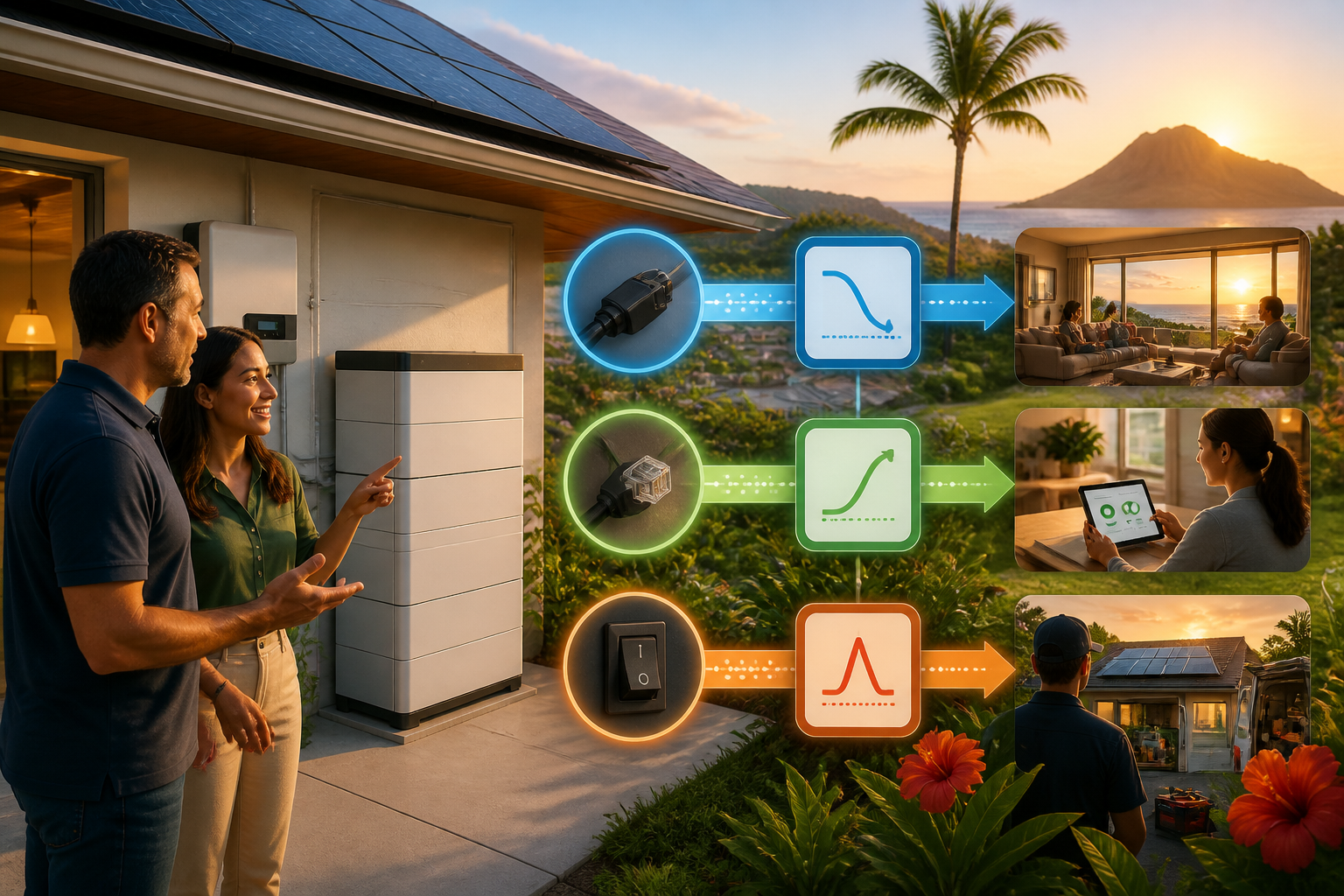
Closed loop lets the battery speak for itself
In closed-loop operation, the V16’s battery-management system, or BMS, communicates with a compatible inverter through the documented CAN or RS485 path. The battery can share information such as state of charge, temperature, alarms, and charge or discharge limits. The inverter then uses that information while it operates.
That matters because battery limits are not always one fixed number. Temperature, state of charge, protection events, and the condition of the battery bank can change what charging or discharging is appropriate. With a proper closed-loop connection, the inverter has more than a simple voltage reading to guide it.
For you, the practical benefit is better coordination. The inverter can make charging decisions from battery data instead of relying entirely on a few numbers typed in during setup. Monitoring can also show a more useful picture of the battery’s condition, rather than only showing battery voltage and current.
Open loop gives you a workable fallback, with more responsibility
Open-loop operation means the inverter does not have a recognized live BMS conversation with the V16. The power connection can still be made, but the inverter manages the battery using manually selected voltage, current, and state-of-charge settings where those functions are available.
That does not make open loop automatically wrong. It can fit an inverter that does not have an approved V16 communication profile, or a system where the exact closed-loop path has not been confirmed. But the setup becomes less dynamic. The inverter cannot respond to every battery-side limit in the same way it can when the BMS is communicating directly.
This is where careful system design matters. I would not copy open-loop settings from a different Pytes battery, a different V16 revision, or a different inverter family. The correct values depend on the exact V16 documentation, inverter model, firmware, battery-bank arrangement, and the intended operating mode.
Charging control is the biggest everyday difference
With closed loop, the battery can tell the inverter when charging current should be reduced or when a limit has changed. That gives the inverter a clearer operating target during solar charging, generator charging, or grid charging.
With open loop, the inverter follows the fixed settings entered during commissioning. Those settings need to be conservative and appropriate for the battery system. If they are too aggressive, the inverter may ask for more charge or discharge than the planned battery arrangement should provide. If they are too cautious, you may leave useful system performance on the table.
That’s why I separate the V16’s recommended battery current from the inverter’s own battery-input rating. The battery, the inverter, the cables, overcurrent protection, and the number of batteries in parallel all have to agree.
Monitoring changes, too
Closed-loop communication can give the inverter and its monitoring platform access to battery-management information, including reported state of charge and fault conditions. That makes troubleshooting easier because I can compare what the inverter believes with what the battery is reporting.
Open-loop monitoring is usually more limited. You may still see battery voltage, current, and inverter operation, but those readings do not replace the V16’s internal BMS information. A normal-looking voltage does not prove that every battery limit, temperature condition, or internal alarm is satisfied.
Commissioning should follow the communication choice
For a closed-loop V16 system, I would confirm the exact inverter model and revision, use the documented communication port and cable, select the correct battery profile, set the V16 communication address or DIP configuration as required, and verify that the inverter is actually receiving battery data.
For an open-loop system, I would document the manually selected battery settings, confirm the intended charge and discharge limits, verify low-battery behavior, and watch the system through a controlled charge and discharge. In either case, Pytes’ startup guidance calls for the battery to be operating before the inverter is turned on.
The Pytes V16 gives us a strong storage platform for a Hawaii backup or off-grid system. The best result comes when its communication method is chosen before the inverter and settings are finalized. If you’re comparing an inverter for a V16, contact SolarMan with the exact inverter model and the number of batteries you’re considering. I can help you determine whether the system has a documented closed-loop path or whether an open-loop design deserves a closer review.