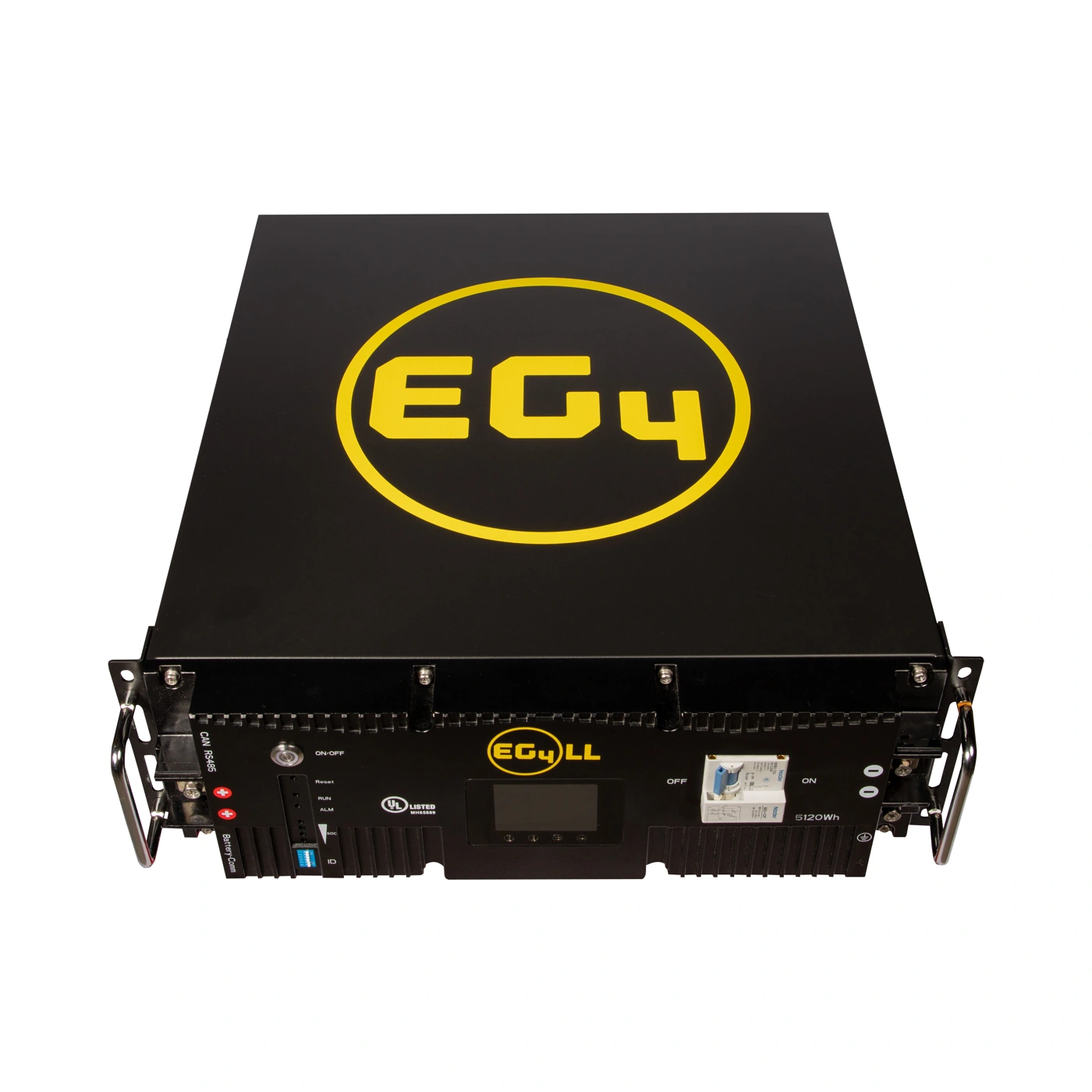
One feature I want customers to understand on the EG4 LL-S is the emergency stop, or E-Stop. It isn’t just another button on the front of a battery. It’s part of a planned shutdown path that can help stop the battery system quickly when there’s a serious problem, emergency, or need for professional service.
That matters in a Hawaii home because your battery rack may be supporting the house when the grid is down. If there’s smoke, damaged equipment, flooding, or an electrical fault, you want the shutdown point to be clear and useful—not something an installer has to explain from memory while everyone is standing around the equipment.
The LL-S gives us a 51.2-volt foundation
The EG4 LL-S is a 51.2-volt, 100 amp-hour lithium iron phosphate battery. That works out to 5,120 watt-hours, or 5.12 kilowatt-hours, of nameplate energy. EG4 lists 100 amps as the maximum continuous charge and discharge current for one module, with 50 amps as the recommended system setting in the current specification sheet.
Those numbers help us match the battery to an inverter and a load plan. The E-Stop answers a different question: how do we stop the energy-storage system when normal operation should no longer continue?
What the emergency stop actually does
The LL-S manual describes the E-Stop as a communication-based shutdown function. An optional energy-storage-system disconnect can send the emergency-stop signal through the battery communication system. If the inverter has rapid-shutdown capability, that equipment may provide the compatible pathway instead.
With EG4 inverters, the manual says a separate battery shutdown switch is not needed for the batteries when the inverter initiates the rapid-shutdown or system-disconnect sequence. That doesn’t mean every inverter or every installation works the same way. The exact inverter model, its rapid-shutdown features, and the system disconnect equipment still have to be matched before we call the function complete.
In plain language, the LL-S can participate in a coordinated shutdown. It is not a substitute for properly selected overcurrent protection, battery disconnects, inverter shutdown controls, or the rest of the electrical safety design.
Why I want the shutdown path planned early
I’d rather decide the E-Stop location and system relationship while we’re planning the rack than discover later that the button is hidden, the communication cable path is awkward, or the selected inverter doesn’t support the expected signal.
The LL-S uses a Battery-Comm communication path for the emergency-stop signal. The current manual describes an optional ESS disconnect using a standard Category 5 or Category 6 Ethernet cable for that communication connection. That is a system-planning detail, not a reason to improvise a cable or copy a terminal arrangement from another battery. The exact equipment and connection method belong in the approved design.
I also want the shutdown control to be accessible to the people who may need it. A battery rack tucked into a crowded utility room can be electrically correct and still be difficult to use during an emergency. We should think about visibility, access, labeling, and whether the local authority having jurisdiction has additional requirements.
What I would explain during handoff
When I hand over a system using the LL-S, I want the homeowner to know three things. First, the normal battery on/off controls are not the same as the whole-system emergency-stop plan. Second, pressing an E-Stop can interrupt the coordinated battery and inverter operation, but it does not make every conductor in the property automatically safe. Third, after an emergency shutdown, a qualified person should inspect the system before restarting it.
That last point is important. A shutdown is a protective action, not a diagnosis. If the system stopped because of smoke, water, impact, overheating, or an electrical alarm, we need to find the cause before bringing the equipment back online.
For a broader visual explanation, HeatSpring’s lesson on residential rapid shutdown explains why the activation method matters and how a shutdown signal changes photovoltaic-system voltage during an emergency. I’d use it for the general safety picture, then match the lesson to the EG4 manual, exact inverter, disconnect equipment, and installation plan in front of us.
If you’re considering an EG4 LL-S battery bank, contact SolarMan before ordering the rack equipment. I can help match the battery count, inverter communication path, shutdown method, and service access so the system is understandable when it is operating—and when it really needs to be stopped.