How I Size the EG4 LL 24V 200Ah Battery Around Real Loads
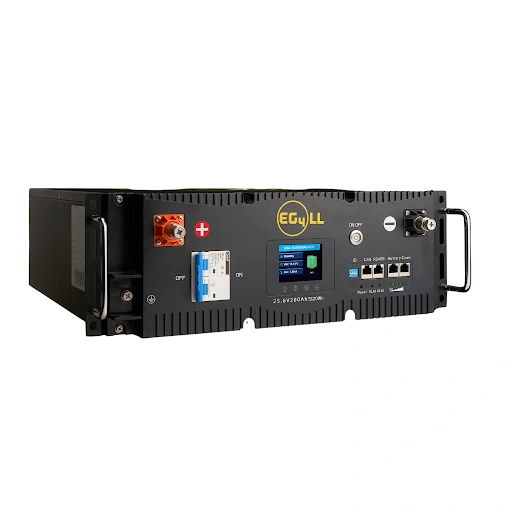
What I like about the EG4 LL 24V 200Ah is that it gives us a clean starting point for a real conversation about loads. It is not just “a battery.” It is one 25.6-volt, 200-amp-hour storage block with 5.12 kilowatt-hours of nominal energy, a built-in battery management system, an LCD screen, and communication ports for supported inverter systems.
That makes it easier to ask the useful question: what do you actually want this battery to run, and for how long?
Start with the energy you can reasonably plan to use
Five point twelve kilowatt-hours is the battery’s nameplate capacity. EG4 recommends keeping the state of charge above 20 percent to maintain an 80 percent depth of discharge. In practical planning terms, 5.12 kWh × 0.80 gives us about 4.10 kWh of recommended daily usable energy from one battery.
That is a planning number, not a promise that every watt-hour will reach your appliances. Inverter efficiency, wiring, temperature, battery condition, and the way the loads operate all affect what you see at the outlets. Still, it is a much better starting point than guessing from the word “200Ah.”
For example, a 100-watt load running for ten hours uses about 1.0 kWh. A 500-watt load running for four hours also uses about 2.0 kWh. Those are very different appliances, but the battery calculation begins the same way: watts multiplied by hours equals watt-hours.
Why the 24V format matters
This battery is designed for a 24V-class system. That can be a very good fit when the inverter, charge equipment, and loads are also built around 24 volts. The benefit is a straightforward battery bank that fits smaller off-grid systems, cabins, backup systems, and other projects that do not need a large 48V architecture.
The tradeoff is current. For the same power, a 24V battery system carries about twice the current of a 48V system. A 2,000-watt load is roughly 78 amps at 25.6 volts before accounting for inverter losses. That does not make the EG4 a poor choice. It means I want to match the battery, inverter, overcurrent protection, and conductors as one design instead of choosing the battery in isolation.
Also, the battery’s built-in BMS is rated for up to 200 amps of continuous charge and discharge in the current documentation. That is a battery capability, not a recommendation to connect a 200-amp load or a statement about what your inverter can deliver. The inverter’s own battery-input limits and the complete system design still control the final result.
Expansion is useful when the load plan grows
One battery gives you about 4.10 kWh of recommended usable energy. Two batteries provide 10.24 kWh nominal and about 8.19 kWh at the same 80 percent planning point.
For expansion, I plan conservatively around 16 batteries in parallel. That is the limit shown on EG4’s product page and in the user manual, and 16 × 5.12 kWh equals about 81.9 kWh nominal. One EG4 specification-sheet headline says 64 batteries, but the same sheet’s detailed table says 16, and its 81.9 kWh total matches 16 batteries rather than 64. I would confirm any larger bank against the exact battery revision before building around it.
I like the basic approach because you do not have to pretend you know your future loads perfectly on day one. Start with the loads that matter, then expand in matched parallel batteries if the inverter and system hardware support it. That is a more sensible path than buying a huge bank before you know how you will use it.
The built-in monitoring is more useful than it sounds
The front LCD gives you a way to see battery information without treating the enclosure like a mystery box. The battery also provides RS485 and CAN communication options, and EG4 documents supported closed-loop communication with selected inverter systems. When that communication is compatible, the inverter can use battery information such as state of charge and protection status instead of relying only on fixed voltage guesses.
EG4’s own video lesson, Sol-Ark and EG4-LL Lithium Battery BMS Communications, is a helpful general introduction to why that communication link matters. It is not a review of your exact installation, but it shows the kind of battery-to-inverter relationship I want to confirm before recommending a system match.
The EG4 LL 24V 200Ah is a strong candidate when you want a rack-style battery with a clear energy block, built-in monitoring, long-cycle specifications, and room to expand. I would not choose it from the battery label alone. I would compare your daily loads, inverter voltage, peak demand, charging equipment, and communication requirements. Contact SolarMan and I can help you see whether this 24V battery fits the system you have in mind.
Watch how it works
EG4 Electronics explains “Sol-Ark and EG4-LL Lithium Battery BMS Communications” so you can see the main idea instead of only reading about it.
Sol-Ark and EG4-LL Lithium Battery BMS Communications — EG4 Electronics
Sources and product details
Manuals and product information behind the details above.
- EG4 LL 24V 200Ah product page (Official manufacturer product page)
- EG4 LL 12V/24V User Manual, Version 2.0.9 (Official manufacturer user manual)
- EG4 LL 24V 200Ah Specification Sheet, Version 2.1.6 (Official manufacturer specification sheet)
- A BMS Setup Guide for EG4 Batteries and Inverters (Official manufacturer technical article)
- Sol-Ark and EG4-LL Lithium Battery BMS Communications (Official EG4 Electronics YouTube video)