How I Compare a Hyundai 640-Watt Panel With Other Solar Quotes
When you compare solar quotes, it’s easy to look at the biggest wattage number and stop there. I think you’ll make a better decision if you compare four things together: the panel’s rated power, its efficiency, how its bifacial design is being evaluated, and the warranty behind it.
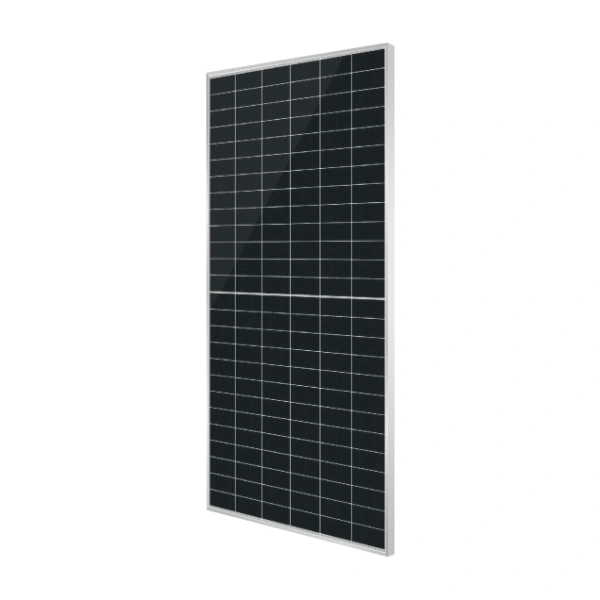
That’s why I like the Hyundai HiC-T640NJ. It gives you a strong 640-watt front-side rating, 22.9% module efficiency, a double-glass bifacial design, and a long performance warranty. Those are useful advantages, but each number answers a different customer question.
Start with the simple array math
Ten Hyundai 640-watt panels add up to 6,400 watts of rated panel power. That’s a clear way to describe the size of the array, but it isn’t a promise that the system will produce 6,400 watts all day. Sun angle, clouds, shade, panel temperature, wiring, inverter limits, and the rest of the system still affect production.
I use that arithmetic as a starting point, not as a daily-energy forecast. If your target is roughly 6.4 kilowatts of solar capacity, ten modules gets you there on paper. Then I look at the roof or ground-mount layout, the inverter, your usage, and whether batteries are part of the plan.
Efficiency tells me how much sunlight becomes electricity
Efficiency is different from wattage. The Department of Energy describes photovoltaic efficiency as the percentage of incoming solar energy converted into usable electricity. Hyundai lists the HiC-T640NJ at 22.9% efficiency under its standard test conditions.
Here’s a useful way to understand that number. The module measures about 2.465 by 1.134 meters, or approximately 2.80 square meters. Under the standard test condition of 1,000 watts of sunlight per square meter, that is about 2,800 watts of sunlight reaching the panel. At 22.9% conversion efficiency, the result is approximately 640 watts of electrical output.
That doesn’t mean efficiency eliminates layout work. A large panel still has to fit the available roof, setbacks, attachment locations, access paths, and structural plan. I never assume that fewer modules automatically means a smaller or cheaper installation. Those details depend on the site.
Bifacial power is useful, but the test condition matters
The HiC-T640NJ is bifacial, so its rear side can use reflected light when the mounting and surroundings allow it. A bright surface, suitable spacing, and enough light reaching the back can make that design more valuable. A tight roof installation with little rear-side light may not receive the same benefit as an elevated ground mount or carport.
Hyundai lists 640 watts under its standard front-side test. It also lists 704 watts under its bifacial nameplate irradiance, or BNPI, test. That BNPI test uses 1,000 watts per square meter on the front and 135 watts per square meter on the rear. I treat the 704-watt figure as a controlled comparison point—not as a guarantee of what every Hawaii installation will produce.
The same distinction matters when I check inverter compatibility. An inverter has separate limits for the current it may operate at—often shown as maximum input or maximum tracking current—and the array short-circuit current it is permitted to accept. The datasheet lists 13.37 amps of operating current and 14.14 amps of short-circuit current under the standard test. Under the BNPI condition, those figures rise to 14.70 and 15.59 amps. Those module test values are not interchangeable inverter limits. Series and parallel stringing, along with rear-side light, still have to be matched to the exact inverter and module datasheets.
TOPCon and the warranty add value beyond the headline
TOPCon means tunnel oxide passivated contact. In plain language, it’s a solar-cell design that uses a very thin passivating layer to reduce electrical losses where charge is collected. That helps explain why this panel reaches a high efficiency rating, but I still judge the complete product rather than the technology name by itself.
Hyundai’s datasheet lists a 15-year product warranty covering materials and workmanship, plus a 30-year performance warranty. The published performance terms allow for 1% degradation in the first year and then 0.4 percentage points of annual degradation, with 87.4% warranted through year 30. A warranty doesn’t replace good design, but it gives you a useful long-term benchmark when comparing otherwise similar quotes.
My practical advice when you’re comparing panels
Ask for the exact model number, not just “a Hyundai 640.” Then compare the rated watts, efficiency, dimensions, bifacial assumptions, inverter match, warranty terms, and the price per watt in the actual proposal. The price I have on these panels is excellent, but I’d rather give you a current quote than invent a number that may not match your project.
If you’re planning a Hawaii roof, carport, ground mount, or battery-backed system, contact SolarMan. I can help you see whether the HiC-T640NJ fits your available space, inverter, energy target, and installation plan—or tell you honestly when another panel makes more sense.
Watch how it works
A short general lesson on how photovoltaic panels convert sunlight into usable electricity.
Energy 101: Solar PV — U.S. Department of Energy
Sources and product details
Manuals and product information behind the details above.
- HD Hyundai Energy Solutions HiC-TxxxNJ commercial module datasheet (Exact-model manufacturer datasheet copy)
- U.S. Department of Energy — Solar Photovoltaic Performance and Efficiency Basics (Government technical education)
- U.S. Department of Energy — Solar Photovoltaic Cell Basics (Government technical education)
- U.S. Department of Energy — Crystalline Silicon Photovoltaics Research (Government technical education)
- NREL — Photovoltaic Bifacial Irradiance and Performance Modeling Toolkit (National laboratory technical resource)
- CLEAN Network — Energy 101: Solar PV (Reviewed educational video page)
- U.S. Department of Energy — Energy 101: Solar PV (Official video landing page)