The Fortress Power Solo 6.5K makes the most sense when we give it a clear job. I like it for a customer who wants more than a small 120-volt backup box but does not need to build the system around a much larger inverter. It can provide 120/240-volt split-phase power, accept solar and battery energy, and work with a utility or generator source.
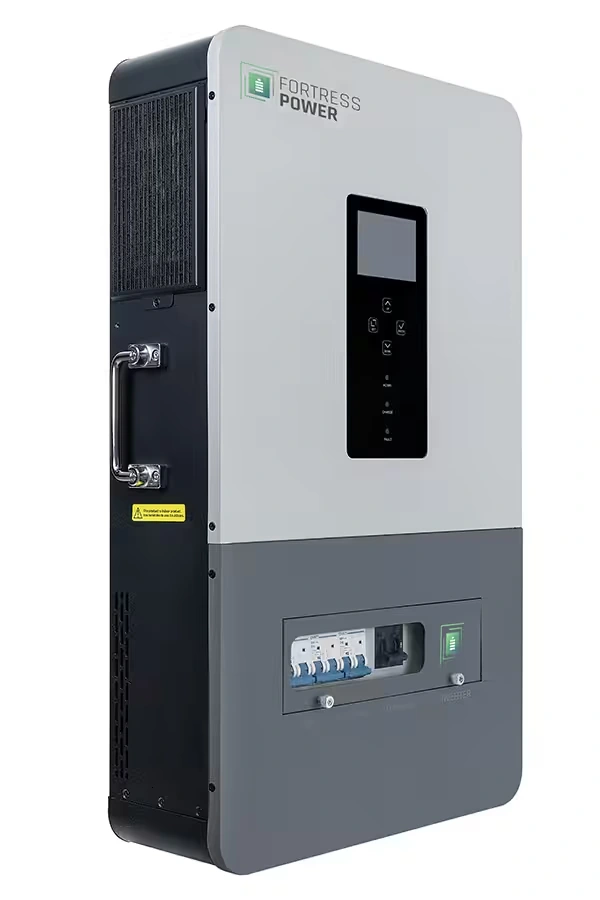
That combination gives us useful flexibility in Hawaii. We can back up selected household circuits, build an off-grid system for a cabin or workshop, or plan a non-export system that uses solar and batteries while keeping the utility or generator available when needed.
Start with the loads you actually want running
The Solo 6.5K is rated for 6,500 watts of output. I would treat that as the total inverter output available to the system—not 6,500 watts for each side of a 120/240-volt panel.
For example, a 240-volt well pump, a refrigerator, lights, internet equipment, and a few receptacle loads may fit comfortably if they are not all starting or running at their highest demand together. A large electric water heater, range, dryer, pump, and air conditioner operating at the same time can change that answer quickly.
This is where a load conversation is more useful than a nameplate comparison. We need to identify which circuits matter during an outage, which loads are flexible, and which motors have a difficult starting event. The Solo 6.5K can deliver up to 13,000 volt-amps for five seconds, but that short peak is there to help with selected starting events. It is not permission to run every large load continuously.
Why 120/240 volts can be valuable
Many Hawaii homes have both ordinary 120-volt circuits and larger 240-volt equipment. The Solo 6.5K’s split-phase output gives us a way to plan around that reality instead of pretending the home is made up of only small plug-in loads.
A 120-volt refrigerator and a 240-volt pump are different design problems. The pump needs both sides of the split-phase output and may demand extra current while starting. The refrigerator may run at modest power but still have a brief compressor surge. I want to see those loads together, along with battery capability and cable losses, before I say the system is a match.
The inverter also lists a typical 10-millisecond transfer time for its backup output. That helps explain why customers may use it for essential circuits that need to remain powered during a source change, although the final system arrangement still depends on the equipment, settings, and installation design.
Battery size still decides how long the system lasts
The Solo 6.5K works with a 48-volt battery system and can charge from solar at up to 140 amps according to Fortress Power’s current product information. That is useful power-handling capability, but the inverter does not create energy by itself.
If your backed-up loads average 2,000 watts for four hours, the simple load estimate is 8 kilowatt-hours. The battery bank must provide that energy plus the losses and reserve we allow for the system. If the home needs several cloudy nights of reserve, I may recommend more battery capacity, a generator plan, or a smaller backed-up load list—not just a larger inverter.
AltE Store’s lesson What Can I Power with a 100W Solar Panel? walks through the same basic load-to-energy math: watts, watt-hours, battery storage, inverter losses, and reserve. I like that lesson for making the calculation understandable before we apply it to a larger Solo 6.5K system.
Fortress Power lists the Solo 6.5K as compatible with several of its battery families, including eBoost, eForce, eFlex MAX, and eVault MAX. The exact battery model, quantity, communication method, and current limits still need to be matched before commissioning.
Generator support gives the system a recovery path
Solar and batteries can carry a lot of the daily work, but a generator can give an off-grid or backup system a way back after extended cloud cover. The Solo 6.5K has a generator input and a documented maximum generator input power of 9,600 watts, while the manual lists maximum battery charging from the generator at 4,000 watts.
Those are different numbers. The generator must serve the system’s active loads as well as the battery charger, so I would not size a generator by looking only at the charging figure. The generator’s starting surge, fuel type, operating behavior, and automatic-start controls matter too.
Where I would consider the Solo 6.5K
I would put this inverter on the short list for a smaller whole-home backup plan when the measured simultaneous loads fit, an off-grid home with carefully selected loads, a workshop, cabin, mobile installation, or a system that may grow by paralleling units later. Fortress Power documents up to six parallel Solo 6.5K units, or up to 39 kilowatts of combined output, when the system is designed for that arrangement.
I would not choose it by starting with the biggest appliance in the house. I would start with the circuits you want protected, the largest motor starting event, the overnight energy use, the battery bank, the solar array, and the backup-source plan. If those pieces line up, the Solo 6.5K can give the system a useful 120/240-volt center without making every part of the project oversized.
Bring me your panel schedule, major appliance information, battery preference, and generator details. I can help you determine whether the Fortress Power Solo 6.5K is the right fit, which loads belong on the backup side, and what the rest of the system needs to do its job reliably.