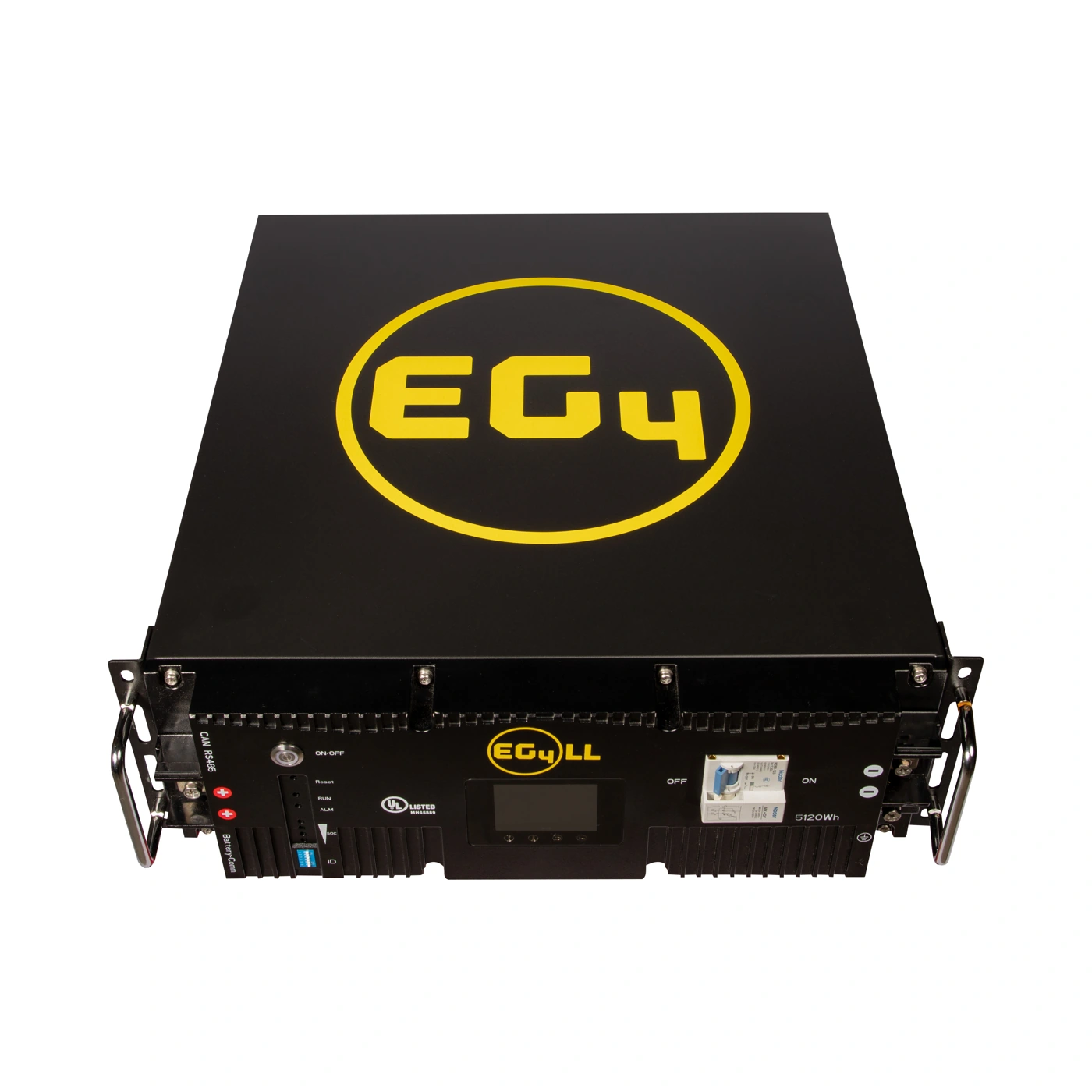
I like the EG4 LL-S because it gives you a clean way to build a 48-volt battery bank one module at a time. But the part customers sometimes overlook is the room around the rack. A battery cabinet is not just a place to slide batteries. It is also where the power connections, communication cables, disconnect equipment, and future service work have to make sense.
Each EG4 LL-S module is rated at 51.2 volts and 100 amp-hours, or about 5.12 kilowatt-hours of nominal stored energy. EG4’s manual lists the module at 6.1 inches high, 17.4 inches wide, and 19.3 inches deep, with a weight of 99.6 pounds. That is already a serious lift. Before we talk about wiring, we need to know how the battery gets from delivery to the rack with the right handling plan.
Start with the path to the rack
I want to know the entire route: driveway, doorway, stairs, hallway, and the final turn into the equipment area. Six LL-S batteries would total about 598 pounds before counting the cabinet, busbars, and other equipment. That is not a detail to discover on delivery day.
That is why I prefer to choose the final location before ordering the battery count. The space should be dry, protected from physical damage, accessible for service, and strong enough for the loaded cabinet. EG4 also instructs users to keep the batteries away from wet locations, high humidity, direct sunlight, and combustible materials.
The rack should not be squeezed into a corner where you cannot reach the front, inspect the display, or work on the communication and power connections later. In Hawaii, I pay particular attention to keeping the equipment area dry and easy to service.
The rack changes as the battery bank grows
One LL-S gives you roughly 5.12 kilowatt-hours of nominal capacity. Six modules would provide about 30.72 kilowatt-hours and raise the nominal bank capacity to 600 amp-hours while keeping the system voltage in the same 48-volt class. That is the useful part of a rack system: you can add energy and battery-side current capability without changing to a different battery voltage.
Those numbers still do not mean that every inverter can use 600 amps. The inverter, battery-management system, over-current protection, busbars, and main battery conductors all have their own limits. I treat the module count as the beginning of the design conversation, not as permission to assume the whole bank can deliver its theoretical maximum to any inverter.
Leave the cabinet breathing room
EG4’s spacing guidance calls for a minimum horizontal separation of 12 inches between two six-slot cabinet pairs containing EG4-LL, LL-S, or LifePower4 batteries. That is an important planning number for a larger system. It affects whether the batteries belong in one equipment area, in separate cabinet positions, or in a layout that leaves enough room to inspect and service the bank.
Inside the cabinet, EG4’s manual directs the installer to load the rack from the bottom upward. The manual also shows each battery connecting to a properly sized busbar rather than paralleling the modules directly through the battery terminals. That gives the bank a cleaner, more serviceable power layout.
Power cables and communication cables have different jobs
This is another reason I like to plan the rack before the equipment arrives. The power path carries the battery current. The communication path lets the battery-management system report information to the inverter or another control device. They are not interchangeable, and the LL-S manual warns that communication cables must go into their correct ports.
With multiple batteries, the LL-S uses a host battery with address 1, while the other batteries receive unique addresses. The battery-to-battery communication path uses the Battery-Comm ports, and the host connects to the inverter through the appropriate RS-485 serial communication or Controller Area Network (CAN) port. I want those cables to be reachable, labeled, and protected from being pinched behind the cabinet.
For a helpful general lesson, TGBATG’s video EG4 Battery Rack Review | AOlithium batteries | Bus bars | Battery Cabinet with wheels enclosed shows how a six-slot cabinet, casters, busbars, cable glands, and battery fit affect the physical planning of a rack system. It is a general rack-and-cabinet lesson, but it gives you a useful picture of why the cabinet, power path, and service space need to be considered together.
My practical advice is simple: decide the battery count, measure the delivery route, reserve the cabinet spacing, and leave room to reach the equipment before we finalize the system. If you are considering the EG4 LL-S for backup power or an off-grid system, contact SolarMan and I’ll help match the rack layout, inverter, busbar plan, and future expansion path to the home you actually have.