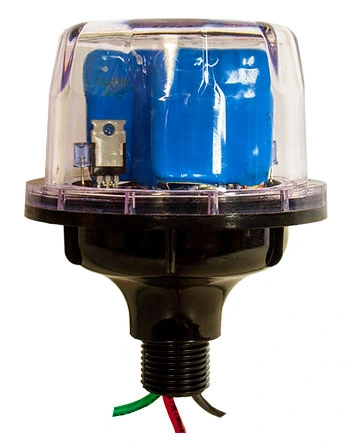
When I help someone plan surge protection, I don’t start with the brand of inverter. I start with the circuit we’re protecting. Is it alternating current (AC) from a service panel or inverter? Direct current (DC) from a battery bank or photovoltaic array? What voltage can that circuit normally reach?
That is where the MidNite MNSPD family earns its place. It gives us several voltage classes and circuit choices, so we can put protection where a surge can travel toward sensitive equipment instead of treating one device as the answer for every part of the system.
AC and DC are different decisions
The MNSPD-300-AC is intended for 120-volt or 120/240-volt AC circuits. The MNSPD-300-DC is the related choice for compatible DC applications such as off-grid photovoltaic combiners and charge-controller inputs up to 300 volts DC. MidNite also says the 300-DC model can protect 120/240-volt AC circuits, so I don’t choose between these two from the model number alone. I check the actual circuit and the equipment documentation first.
The MNSPD-115 is the lower-voltage model for circuits such as 12-, 24-, and 48-volt battery systems. MidNite lists the MNSPD-600 for higher-voltage applications, including 316/480-volt AC circuits, grid-tied photovoltaic combiners, grid-tied inverter inputs, and non-isolated inverter inputs. Those names look similar, but each model still has a specific voltage and application range.
The 300-AC and 300-DC versions also power their blue indicator lights differently. MidNite describes the protection side as identical between those versions, but that does not mean every MNSPD is the right choice for every circuit. Identify the electrical path first, then check the model documentation.
The voltage number is a safety boundary
MidNite’s installation manual makes an important point: the surge protector’s maximum continuous operating voltage must be higher than the system voltage. If the protector is rated too low, it can interpret normal system voltage as an overvoltage event and begin shunting current. That is not the operating condition we want.
For a photovoltaic array, the installer needs to consider the worst-case calculated voltage, not just the number printed on the inverter. For an AC circuit, we check the actual line-to-neutral and line-to-line arrangement. For a battery circuit, we look at the battery system voltage and its charging conditions.
This is why I don’t want customers choosing an MNSPD from a name like “300” or “600” alone. The number is part of the decision, not the whole decision. Circuit type, maximum normal voltage, equipment design, and the intended protection point all belong in the conversation.
Think in protection points, not one magic box
A surge can enter through more than one path. A long outdoor photovoltaic run can bring a surge toward a charge controller. An AC service or generator connection can bring another path toward an inverter. A battery bank may have a different exposure and different voltage requirements.
That does not mean every system needs an MNSPD on every conductor. It means we should look at the system as connected paths and decide which equipment deserves a nearby protective device. MidNite describes the MNSPD as a Type 1 surge protective device for service panels, load centers, or direct connection near the electronic equipment being protected.
Placement matters. MidNite directs installers to locate the device as close as physically possible to the panel or equipment being protected, keep the connection leads as short as practical, and avoid unnecessary bends. Bonding, grounding, conductor routing, and local requirements need to be handled by the qualified installer.
What I want to know before I recommend one
Bring me the inverter or charge-controller model, the battery voltage if the protected circuit is on the battery side, the photovoltaic string voltage if it is a solar-input circuit, and a clear idea of where the equipment is located. I can then separate the AC and DC paths, check whether the MNSPD-115, 300-AC, 300-DC, or 600 class makes sense, and avoid recommending a device that looks close on paper but does not match the circuit.
Fallon Solutions’ “How to protect your home from an electrical surge” lesson gives a plain-language look at what a whole-home surge-protection device is doing. It shows how an overvoltage event is diverted toward ground and how an indicator can help show whether the protection device is still working. That makes the protection idea easier to see before we apply the model and placement decision to your actual solar system.
If you’re protecting a new solar installation, an inverter replacement, or an older Hawaii system that has already seen a storm, contact SolarMan. Send me the equipment models and the circuit you’re concerned about, and I’ll help you decide which MNSPD conversation belongs in the design.