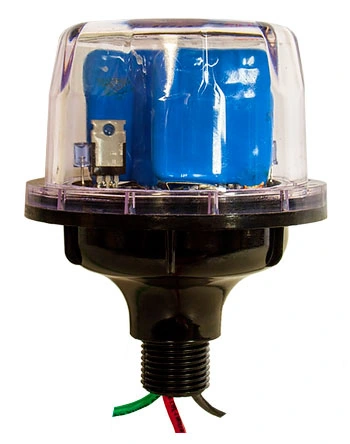
When I talk with a customer about surge protection, I don’t start with the idea that one little device can protect an entire solar system. A better plan follows the power. Utility conductors, photovoltaic array wiring, battery wiring, and generator or inverter AC wiring are different paths, so they may need different MidNite MNSPD models in different locations.
That’s what I like about the MNSPD family. MidNite gives us a way to match the protector to the circuit instead of treating every surge-protection job as the same. These devices are offered for AC and DC applications in several voltage classes, with an enclosure suitable for indoor or outdoor use. The useful part for you is not the label by itself. It’s getting the right protection at the right electrical location.
One solar system can have several surge paths
Picture a typical Hawaii system with panels on the roof, a combiner or disconnect, a charge controller or hybrid inverter, batteries, and an AC service panel. A nearby lightning event or a utility disturbance can reach the equipment through more than one route.
An MNSPD-300-DC may be appropriate for an off-grid photovoltaic combiner or a charge-controller input rated up to 300 volts direct current. An MNSPD-300-AC is the related choice for 120- or 120/240-volt alternating-current circuits. Those names look similar, but they are not interchangeable. The AC and DC versions are designed for different electrical systems.
MidNite also lists the MNSPD-600 for higher-voltage applications such as 316/480-volt AC circuits, grid-tied photovoltaic combiners, and grid-tied inverter inputs. The MNSPD-115 is aimed at lower-voltage applications, including 12-, 24-, and 48-volt battery circuits. The model number is a starting clue, not permission to guess. I still want to see the actual system voltage and the equipment labels before choosing one.
The voltage check protects the protector, too
A surge protector has a maximum continuous operating voltage, often shortened to MCOV. That is the voltage it can tolerate continuously during normal operation. MidNite’s installation manual is very clear that the protector’s operating rating must be higher than the system voltage. If the rating is too low, the MNSPD can interpret normal system voltage as an overvoltage event and begin conducting when it should be waiting.
That is why I don’t select an MNSPD just because the system is called “300 volts” or because a nearby inverter has a similar number in its specifications. For a solar array, the installer needs to consider the array’s maximum operating voltage, including the cold-weather voltage calculation. For an AC circuit, we check the actual line-to-neutral and line-to-line arrangement. For a battery circuit, we look at the battery system voltage and its charging conditions.
Short connections help the MNSPD do its job
The MNSPD works by giving surge energy a path away from sensitive equipment and toward the grounding system. That path matters. MidNite directs installers to mount the device as close as physically possible to the panel or equipment being protected, keep the connection leads as short as practical, and avoid unnecessary bends.
This is one reason I like seeing surge protection near the actual combiner, service panel, or inverter connection rather than mounted far away because there happened to be an empty wall space. Long extra conductors add unwanted path length during a very fast transient. The device and the grounding system need to work together as one protection arrangement.
See the protection idea under test
MidNite’s Surge Protection Device and Delta Comparison video is a useful general lesson because it shows surge-protection devices being compared under test. It is not a review of your exact system, and it does not replace model selection, but it helps make the basic point visible: the protector has to be appropriate for the electrical application and connected as part of a deliberate protection plan.
Blue lights make maintenance easier to understand
The blue diagnostic lights give you something useful to look at without opening the enclosure. On the MNSPD-300-AC, the indicators show that voltage is present between each protected AC leg and ground. On the DC models, the lights indicate voltage between the positive and negative conductors.
There is an important detail for photovoltaic systems: the lights can go out at night because the array is no longer producing voltage. That does not automatically mean the protector has failed. If the expected circuit is energized and the lights are not showing the expected status, the system needs qualified service. The MNSPD contains no customer-serviceable parts, so this is not a place for trial-and-error repairs.
My recommendation is to treat surge protection as part of the system design conversation, not as an afterthought. We can map the AC and DC paths, confirm the voltage and grounding arrangement, and decide whether protection belongs at one location or at several connected points. If you’re building a new system or replacing equipment after a storm, contact SolarMan and I’ll help match the MNSPD plan to the equipment you actually have.
The goal isn’t to promise that any device can stop every possible lightning event. The goal is more practical: give important equipment a properly rated, deliberately placed path for surge energy, then make the condition of that protection easy to check later.