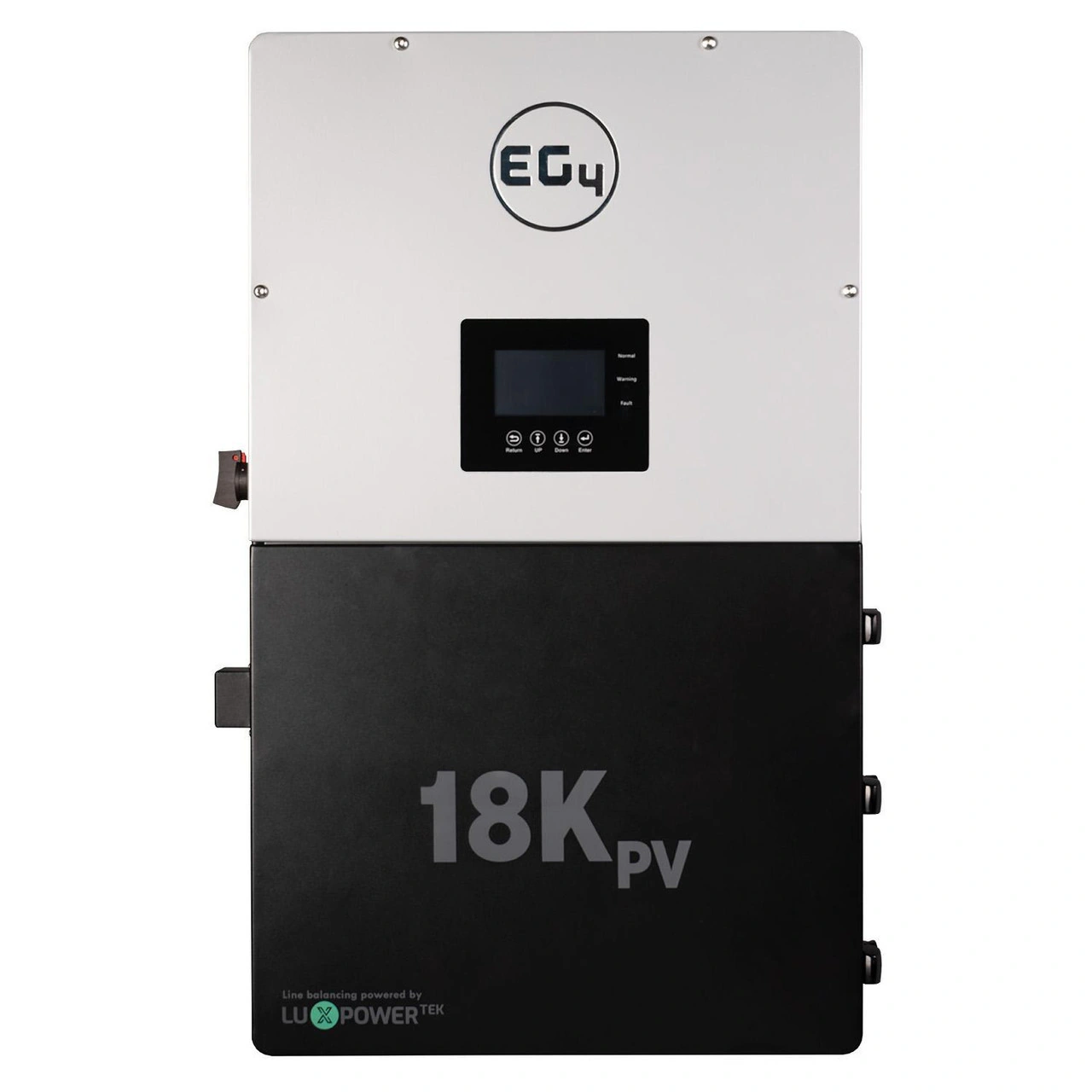
If your backup generator only has to handle every household load by itself, you may end up buying more generator than you need for the few moments when demand jumps. That’s where I find the EG4 18kPV interesting. Its GEN BOOST function can let the generator work alongside available photovoltaic (PV) power and battery power instead of asking the generator to do everything alone.
That can be a useful fit for a Hawaii home with a well pump, refrigerator, catchment equipment, or other loads that do not all run steadily. The generator still needs to be compatible and properly sized. GEN BOOST simply gives the system another way to share the work.
What GEN BOOST does when demand rises
Here’s a practical example. Imagine an 8-kilowatt generator and a temporary household demand of 10 kilowatts. EG4’s GEN BOOST guide recommends setting Max. Generator Input Power to 80% of the generator’s total output. For that generator, the starting calculation is 8 kW × 0.80 = 6.4 kW.
If the loads rise to 10 kilowatts, the 18kPV can use available PV and battery power to help cover the difference. I would not promise an exact 3.6 kilowatts from the battery, because solar production, battery state of charge, charge and discharge limits, and changing loads all affect the result. The benefit is the coordinated power path, not a guaranteed fixed contribution.
Keep the power numbers in their proper lanes
The EG4 18kPV is a 12-kilowatt continuous-output hybrid inverter with up to 18 kilowatts of maximum utilized PV power. Its battery connection has a documented maximum charge and discharge current of 250 amps. Those are different parts of the system: inverter output, PV input, and battery-side current are not interchangeable ratings.
The same distinction matters on the generator side. EG4 documents a 90-amp alternating-current bypass or pass-through path for the generator connection. That is not a recommendation to install a 90-amp generator, and it does not mean a small generator can run every load in the house. EG4’s generator wiring diagram says the total load and charging current must stay within that path rating while the generator is operating.
EG4’s documents also give different minimum-generator figures. The user manual states 6 to 21.6 kilowatts, while the current generator wiring diagram lists 4.0 to 21.6 kilowatts. I would resolve that difference against the exact generator model, inverter revision, firmware, and approved system documentation before ordering equipment. I would also use a 120/240-volt, 60-hertz generator and confirm the generator’s power-quality and compatibility requirements in the current EG4 documentation before ordering.
Why this helps after cloudy weather
In an off-grid system, a generator may be most valuable after several cloudy days, when the battery is low and the PV array has not had enough sun to recover it. EG4’s manual recommends a two-wire-start generator for extended cloudy periods and identifies an 8-to-12-kilowatt diesel generator as a recommendation per 18kPV inverter.
GEN BOOST can help during that recovery period when a pump or another large load starts while the generator is already running. The battery and available PV can help with the temporary demand, while the generator continues its recovery job. The battery bank still has to be large enough, and its battery-management limits and communication settings still have to match the inverter.
One more planning detail matters if you already have solar. The 18kPV’s GEN connection can also accept AC-coupled solar. That means an existing grid-tied solar inverter and a generator may compete for the same system role. I would not assume both can share that connection without checking the exact EG4 diagram and operating mode.
Commission GEN BOOST as part of the system
GEN BOOST is not a substitute for a compatible generator, a capable battery bank, or qualified installation. It is a control feature that becomes useful after the generator input, 80% power setting, battery limits, load priorities, firmware, and automatic-start controls have been matched.
Pacific Yacht Systems has a useful general lesson on inverter/chargers. It explains how generator or shore power can pass through to loads, how an inverter/charger charges the battery, and why the available source, battery bank, and connected loads have to be considered together. That operating picture makes the EG4 18kPV’s GEN BOOST feature easier to understand.
If you’re considering an EG4 18kPV for whole-house backup or off-grid service, bring me your generator size, major motor loads, battery plan, and the circuits you want protected. I can help you decide whether GEN BOOST gives that generator a practical supporting job—or whether the system needs a different generator and battery arrangement.