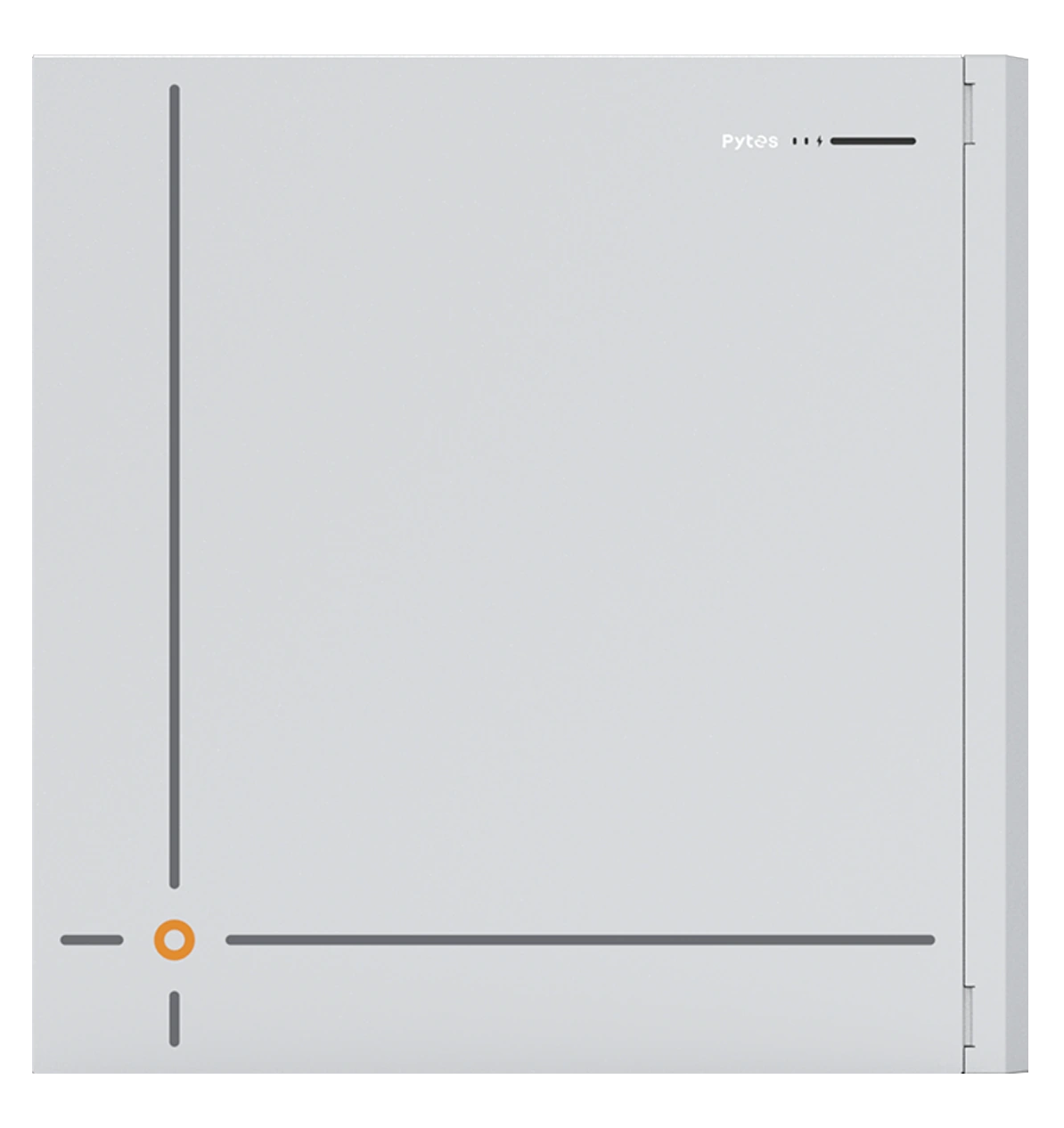
When I recommend the Pytes V16, I’m not only looking at its 16.07 kilowatt-hours of nominal energy. I’m also looking at how manageable the finished system will be after the equipment is installed. A battery that can clearly communicate its limits to the inverter is easier to commission, easier to monitor, and easier to support later.
The V16 is a 51.2-volt lithium iron phosphate battery with a 314 amp-hour capacity. Pytes lists a recommended charge current of 125 amps, a recommended discharge current of 150 amps, and a maximum discharge current of 200 amps. Those are battery-side figures, not automatically the same as the inverter’s output rating. The inverter, battery bank, wiring, protection, and operating settings still have to be matched as one system.
There is another useful detail here: the battery-management system can reduce the permitted charge or discharge current under certain temperature and state-of-charge conditions. So during commissioning, I want to see the limits the battery is actually reporting, not just compare the inverter with the headline numbers.
The communication path is part of the battery design
Pytes provides Controller Area Network (CAN) and RS-485 serial communication through the V16’s communications port for inverter integration. The battery also supports Wi-Fi for monitoring and firmware updates. Its dry-contact connection serves a different purpose, including the emergency-stop function. Those paths should not be treated as interchangeable just because some of the connectors look similar.
In a closed-loop system, the battery-management system can report information such as battery voltage, current, temperature, state of charge, and protection status to a compatible inverter. The inverter can then use the battery’s permitted charging and discharging limits instead of relying only on numbers entered manually.
That is why I want the exact inverter model and the applicable Pytes communication profile identified before commissioning. “It’s a 48-volt inverter” is not enough. The installer still needs to confirm the correct communication method, cable pinout, battery setting, firmware relationship, and any inverter-side battery selection. A V16 can have the right voltage and still fail to communicate if that conversation is configured incorrectly.
Parallel batteries need one clear leader
One V16 stores about 16 kilowatt-hours nominally. Pytes documents expansion up to 16 V16 batteries in parallel, but adding batteries does not mean every unit should be configured independently at the inverter. A parallel bank needs a coordinated communication arrangement, with one battery acting as the master and the other batteries following that system relationship.
This matters during startup and troubleshooting. Pytes identifies the master battery for a parallel system and uses that battery’s start button to wake the bank. The other batteries still have their own breakers and power switches addressed as part of the startup procedure. If several batteries are treated like unrelated devices, the inverter may see incomplete information or the bank may not behave as expected.
The power side also deserves a proper design. Pytes shows multiple batteries connecting through positive and negative busbars rather than casually stacking battery connections together. I’m keeping that explanation conceptual here because the actual cable size, over-current protection, busbar arrangement, and enclosure details belong to the approved system design and local electrical requirements.
Battery first, inverter second
One small commissioning detail can make a big difference. Pytes instructs that the V16 should be powered before the inverter is turned on. That gives the battery’s internal electronics time to come online before the inverter’s input capacitors demand their initial energy.
For a single battery, the installer confirms the battery’s switches and indicators, powers the V16, and then brings the inverter online. For a parallel bank, the installer addresses the breakers and power switches on the batteries, uses the master battery’s start button to wake the group, and then turns on the inverter according to the approved procedure.
After startup, I want to know that the inverter recognizes the battery and is receiving sensible information. That may include voltage, state of charge, permitted charge or discharge limits where the inverter displays them, and active alarms. A system can be powered and still have a communication problem, so a green light by itself is not enough.
What this means for a Hawaii system
The V16’s IP66 enclosure, integrated heating system, internal direct-current breaker, pre-charge circuit, and aerosol fire-suppression module give it a strong starting point for outdoor energy storage. But IP66 is not a license to place the battery in direct sun, rain, snow, or standing water. Pytes’s installation guidance calls for a suitable shaded, protected location with appropriate clearance, ventilation, and service access. Hawaii sites also deserve a careful review of salt exposure and long cable paths.
I like the V16 when the system is planned around those relationships from the beginning. If you’re considering one V16 for backup, several units for a larger home, or a battery bank paired with a new inverter, contact SolarMan. I can help match the battery communication path, inverter profile, load expectations, and expansion plan before the equipment arrives.
If you want to see the physical sequence, Pytes’ installation lesson walks through mounting, conduit and inverter preparation, wiring, communication connections, and powering the system. It’s useful because it shows how the battery and inverter become one coordinated installation rather than treating the battery as an isolated box.