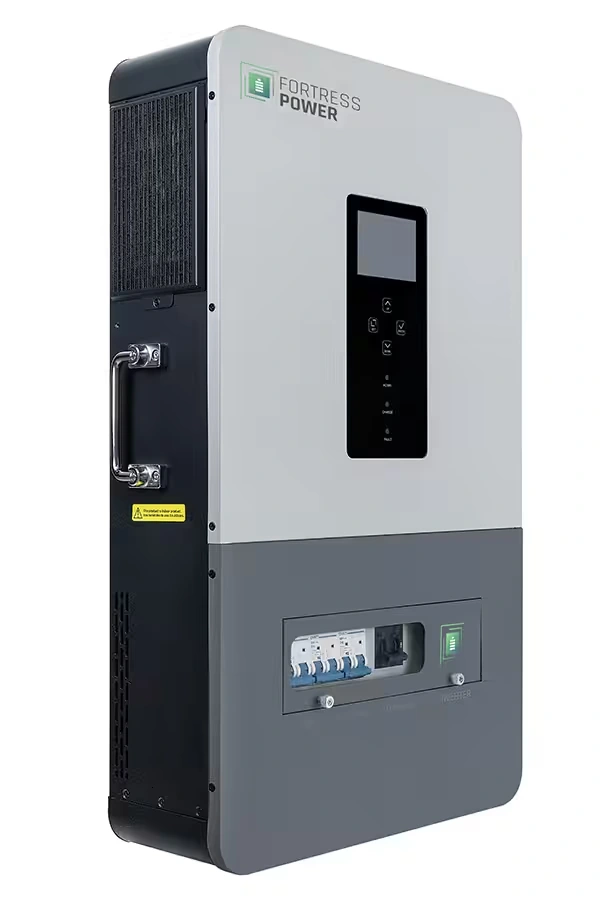
For a Hawaii home or cabin that may face several cloudy days, I like giving the Fortress Power Solo 6.5K more than one way to recover. Solar can do the daily work, the battery can carry the quiet hours, and a properly matched generator can step in when the battery needs help. That makes the generator a recovery tool instead of something you expect to run every day.
The important part is matching the generator to the job. Fortress Power lists a minimum recommended continuous generator rating of 4 kilowatts for one Solo 6.5K. For a parallel system, that recommendation changes with the number of inverters, so I would not reuse the single-inverter figure automatically. I would still look at your actual loads, battery size, charging target, and generator behavior before treating 4 kilowatts as a final system size.
The generator does two jobs at once
When the generator is operating through the Solo 6.5K, it can supply the connected backed-up loads while the inverter charges the battery. That sounds simple, but it changes how we think about generator capacity. The generator is not serving the house first and then magically providing unlimited power for charging.
Fortress specifies a 40-amp pass-through capability for the generator path. The total load being supplied and the charging current being taken together must stay within that limit. So if pumps, refrigerators, or other loads are already using much of the generator's available capacity, the charging portion has less room. This is why I want the generator charging-power setting chosen deliberately rather than left to guesswork.
Voltage has to match before we talk about convenience
The Solo 6.5K can be configured for 120-volt operation or 120/240-volt split-phase operation. Your generator needs to match the nominal voltage selected in the inverter. A 120-volt generator and a 120/240-volt system are not interchangeable just because both are called “120 volts.” The generator, inverter setting, backed-up load panel, and local electrical design all need to agree.
This matters especially in Hawaii homes with 240-volt pumps, well equipment, or other split-phase loads. A 120-volt arrangement may fit a smaller cabin or a carefully selected group of essential circuits, while a 120/240-volt arrangement may be the better match for a home with equipment on both legs. Fortress Power also specifies a neutral-bonded generator. I would decide the voltage arrangement from the loads first, not from the generator label alone.
Remote start is useful, but it is not a substitute for setup
The Solo 6.5K supports a two-wire generator-start connection. That gives the system a way to request generator operation when the design calls for it, but the generator itself must support the appropriate remote-start behavior. The start signal, generator voltage, charging power, and operating mode all need to be commissioned together.
I also want the battery communication and battery limits checked before the generator is asked to recover the system. A 48-volt battery bank may accept substantial charging power, but the battery-management system, battery model, temperature, and inverter settings still define what is actually appropriate. The generator should support the battery plan—not overpower it.
What this looks like in a real system
Imagine an off-grid home after several rainy days. The Solo 6.5K is still carrying essential loads, but the battery has reached the reserve point chosen for that system. The generator starts, the household's selected loads continue operating, and the available generator power is divided between those loads and battery charging. Once the battery has recovered, the generator can stop and solar can take over again.
That is the value I see in this arrangement: you can design for normal solar operation without pretending every week has perfect weather. The Solo 6.5K gives the system a 6,500-watt rated output, two maximum power point tracking channels, a built-in 140-amp solar charging capability, and generator input in one compact inverter. The generator fills the weather gap; it does not replace good battery and load planning.
For a broader explanation of how an inverter and charger can pass incoming generator power through to loads while charging a battery, Pacific Yacht Systems' How To: Marine Electrical Seminar - Inverter/Charger - Episode 4 of 12 is useful. It connects pass-through, generator or utility power, load sizing, and battery charging in a way that makes this part of the Solo 6.5K system easier to picture.
If you are considering a Solo 6.5K for a Hawaii home, cabin, workshop, or backup system, contact SolarMan. Bring me the generator nameplate, the loads you want protected, your battery choice, and whether you need 120 volts or 120/240 volts. I can help you decide whether the Solo 6.5K and generator are being asked to do a sensible job together.