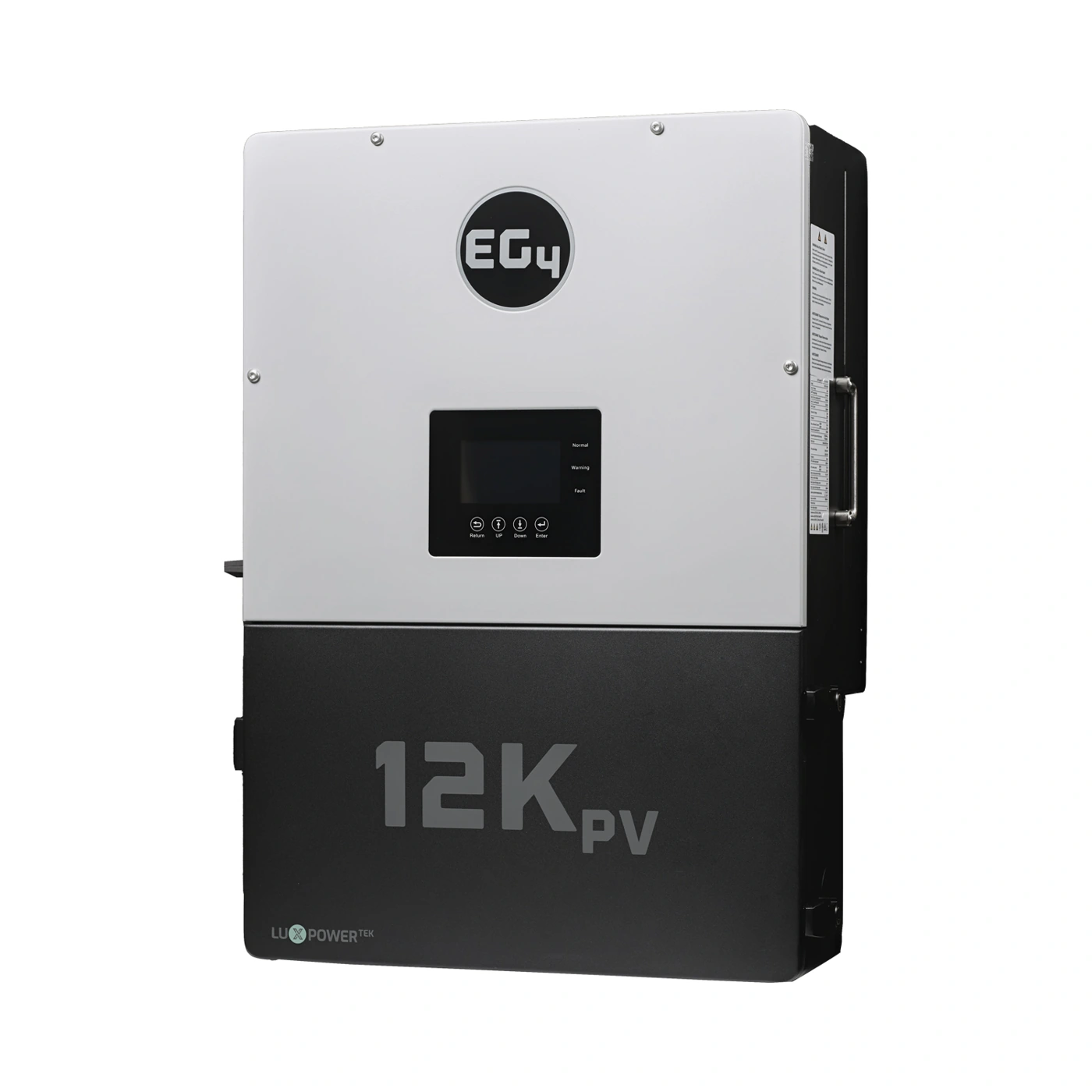
I like the EG4 12kPV when a customer wants a 48-volt split-phase hybrid system with solar, batteries, and real backup capability. The useful part isn’t just the 12 kW name. EG4 gives the inverter an 8 kW continuous AC output, up to 12 kW of utilized photovoltaic (PV) input, and a recommended maximum array size of 15 kW. That gives us room to build around the roof and the sunlight instead of assuming a solar array produces its nameplate power all day.
That extra design room can be valuable in Hawaii, where a roof may have more than one orientation or where the array spends part of the day outside its best production window.
Why a 15 kW array can make sense
The simple comparison is 15 kW divided by 12 kW. The recommended array is 1.25 times the inverter’s maximum utilized PV input. That does not turn the 12kPV into a 15 kW AC inverter. The panels have more nameplate capacity available, while the inverter controls how much PV power it can use at a given moment.
That can help during early morning, late afternoon, cloudy weather, high temperatures, or less-than-ideal roof orientations. A 15 kW array will not produce 15 kW continuously. Sunlight, shade, temperature, panel direction, and system losses still determine what the inverter sees.
For a simple example, imagine the array is producing 10 kW while the house is using 5 kW. The solar power can serve the loads and send available power toward battery charging, subject to the inverter’s operating limits and the battery’s own charge limits. If the panels briefly offer more power than the inverter can use, the inverter does not turn that entire panel rating into AC output.
Two MPPTs give us two design lanes
The 12kPV has two maximum power point tracking (MPPT) channels. MPPT is the part of the inverter that continually adjusts the panel operating point to collect useful energy. EG4 specifies 25 amps of maximum usable input current per MPPT and 31 amps of maximum short-circuit input current per MPPT. I treat those as two separate checks.
Usable input current is the current the inverter can use while tracking the array. Short-circuit current is the higher current figure used when checking the array against the inverter’s permitted input limit. If strings are placed in parallel, their current adds. That is why a design can look acceptable under one current number and fail the other, especially when using high-current or bifacial modules. With bifacial panels, rear-side light can raise the current we need to consider, so I want the panel datasheet’s applicable operating-current and short-circuit-current values.
Voltage is a separate question. The 12kPV has a 100–600 volt DC input range, a 100-volt startup voltage, and a recommended MPPT operating range of 120–500 volts DC. Six hundred volts is the absolute maximum input specification, not the target operating voltage. Cold-weather open-circuit voltage has to stay below that maximum, while the string must also operate inside the MPPT range under normal conditions.
If you want to see the series-versus-parallel idea, altE Store’s lesson with Amy Beaudet demonstrates how wiring changes voltage and current when panel characteristics differ. It’s a general educational demonstration, not a review of the EG4 12kPV, but it makes the two-current-check conversation easier to visualize.
What this can look like on a Hawaii roof
Suppose your panels occupy two roof areas with different orientations. I may assign one electrically matched group of strings to one MPPT and the other roof area to the second MPPT, provided the voltage and current calculations work for the exact modules and site conditions.
I don’t want to hide two different roof conditions inside one large total-kilowatt number. Panels or strings combined on the same MPPT should have compatible electrical behavior, and parallel strings add current. The final design also has to account for cold-weather voltage, bifacial operating conditions, rapid-shutdown equipment, conductor layout, and the applicable EG4 string-configuration guidance.
Where I think the 12kPV fits best
I see the EG4 12kPV making sense when you want a 48-volt, 120/240-volt split-phase hybrid system for grid-interactive or off-grid use. Its 8 kW continuous AC output is the number I use when discussing household loads. Battery capacity, battery current, surge loads, and generator or utility connections still need to match the complete system.
The inverter also supports remote monitoring and firmware updates through EG4’s monitoring tools, includes two MPPT channels, and carries a 10-year standard warranty. Those features make it easier to think beyond the first installation and plan for support and future changes.
My next step with you is straightforward: show me the roof areas, the exact panel model, the battery plan, and the loads you want backed up. Then we can see whether the EG4 12kPV’s two MPPT channels and recommended 15 kW array size give you the right amount of room—or whether another inverter would be a better fit.